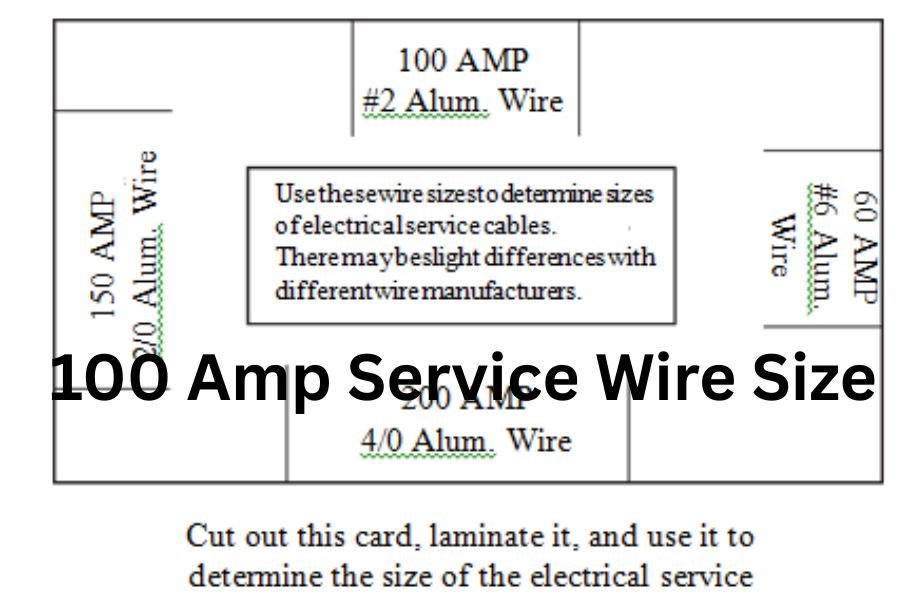
A 100 amp service wire size refers to the electrical conductor used to safely deliver up to 100 amps of current from the utility service or main disconnect to an electrical panel. Selecting the correct wire size is essential because undersized conductors can overheat, cause voltage loss, reduce efficiency, and create safety hazards. Wire sizing depends on conductor material, insulation type, installation environment, distance, and local electrical codes. In most residential installations, copper and aluminum are the most common conductor materials used for 100 amp service.
A 100 amp service wire size is the electrical conductor used to safely carry up to 100 amps from the power source to the electrical panel. In most residential installations, common choices are #2 AWG copper or 1/0 AWG aluminum, depending on insulation type, installation conditions, and local electrical codes.
People also asked In this article, we discuss the topic of “100 amp service wire size“.
Standard Wire Size for 100 Amp Electrical Service

The standard wire size for a 100 amp electrical service generally falls within specific conductor ranges accepted by electrical codes. Copper conductors are usually installed in sizes such as #3 AWG or #2 AWG depending on installation conditions and conductor temperature ratings. Aluminum conductors are commonly installed in #1 AWG or 1/0 AWG sizes because aluminum carries current less efficiently than copper and therefore requires a larger conductor size to safely deliver the same amount of electricity.
Copper vs Aluminum Wire for 100 Amp Service
Choosing between copper and aluminum wire for a 100 amp service depends on cost, performance expectations, and installation conditions. Copper offers better conductivity, excellent durability, reduced expansion and contraction, and smaller conductor sizes. Aluminum is more affordable and lighter but requires larger wire sizes and careful installation practices to accommodate thermal movement and connection reliability. Both materials can safely support 100 amp service when installed correctly according to code requirements.
Recommended Wire Gauge for 100 Amp Residential Panels
For residential applications, electricians frequently recommend #2 AWG copper or 1/0 AWG aluminum for a 100 amp panel installation. These conductor sizes provide sufficient capacity for typical household electrical loads and allow for safer long-term operation. The final recommendation may vary depending on service length, ambient temperature, conduit fill, and regional code adoption.
NEC Requirements for 100 Amp Service Wire Size
The National Electrical Code establishes requirements for selecting service conductors based on ampacity tables and installation methods. NEC requirements consider conductor material, temperature ratings, environmental conditions, and equipment listings. Electricians must also account for conductor adjustments and correction factors where multiple conductors are installed together or exposed to elevated temperatures. Compliance with local code authorities remains mandatory because municipalities may enforce additional standards.
How to Calculate the Correct 100 Amp Wire Size
Calculating the proper wire size for 100 amp service involves more than matching wire to breaker size. Electricians determine the connected load, identify conductor material, calculate distance, estimate voltage drop, and apply temperature corrections if necessary. Additional considerations include whether the service is underground, overhead, inside conduit, or directly buried. Proper calculation ensures both safety and efficient power delivery.
Minimum Wire Size for 100 Amp Main Service
The minimum wire size for a 100 amp main service depends on code requirements and installation conditions. In many cases, #3 or #2 copper conductors and #1 or 1/0 aluminum conductors are accepted. Many installers choose conductors slightly larger than the minimum to support future electrical upgrades and reduce voltage drop over longer distances.
100 Amp Underground Service Wire Size Guide
Underground electrical services require conductor types designed for moisture resistance and long-term underground conditions. Typical installations use THWN conductors inside conduit, underground service entrance cable, or direct burial cable where permitted. Underground runs often benefit from slightly larger conductors to compensate for voltage drop across extended distances.
100 Amp Overhead Service Entrance Wire Requirements
Overhead service installations require conductors specifically designed to withstand outdoor conditions and mechanical stress. Service entrance wires must maintain minimum clearance requirements above roofs, driveways, and public spaces. Utility providers frequently establish additional specifications for overhead conductors, attachment methods, and service equipment.
Distance and Voltage Drop for 100 Amp Wire Sizing
Distance plays a major role in conductor selection because longer wire runs increase electrical resistance and reduce delivered voltage. Voltage drop can negatively affect appliance performance and electrical efficiency. Industry recommendations often target less than three percent voltage drop for branch circuits and service conductors. Longer distances commonly require increasing conductor size beyond minimum ampacity requirements.
Best Copper Wire Options for 100 Amp Service
Copper remains one of the most reliable conductor materials for residential and commercial electrical systems. Popular options include THHN, THWN, XHHW, and SER cable depending on installation conditions. Copper conductors provide strong mechanical durability, high conductivity, and long service life, making them a preferred option despite higher material costs.
Best Aluminum Wire Options for 100 Amp Service

Aluminum conductors provide a cost-effective alternative for larger electrical services. Common options include XHHW aluminum conductors, aluminum service entrance cable, and underground service conductors. Modern aluminum wiring performs safely when terminated properly and installed according to manufacturer specifications.
THHN vs SER Cable for 100 Amp Service
THHN and SER cable are common wiring choices for 100 amp service installations. THHN conductors are installed inside conduit and offer excellent temperature resistance and flexibility. SER cable combines multiple conductors into a single assembly and simplifies residential service installations. The best choice depends on routing requirements, local code acceptance, and installation preferences.
100 Amp Service Entrance Cable Explained
Service entrance cable is the conductor assembly that carries electrical power into a building. It includes insulated conductors for line voltage and neutral connections and integrates with grounding systems. Service entrance cable is designed to withstand environmental exposure and maintain safe operation over extended periods.
Choosing the Right Conductor for 100 Amp Installation
Selecting the correct conductor involves balancing ampacity, cost, installation complexity, voltage drop, and long-term electrical demand. Copper provides premium performance, while aluminum reduces project costs. Installers should consider expansion plans and future electrical needs when making conductor selections.
Can #2 AWG Copper Handle 100 Amps?
Yes, #2 AWG copper is commonly used for 100 amp service applications depending on insulation type and code requirements. Many residential electricians select #2 copper to provide additional margin for temperature conditions and installation flexibility.
Can 1/0 Aluminum Wire Support 100 Amp Service?
Yes, 1/0 aluminum is widely used for residential 100 amp service installations. Because aluminum has lower conductivity than copper, larger conductor sizes are required to safely carry equivalent current levels.
100 Amp Breaker Wire Size Chart
Breaker sizing and conductor sizing must work together to ensure safe operation. A 100 amp breaker is generally paired with conductor sizes approved for carrying at least that current level under actual installation conditions. The final wire size depends on conductor material, insulation, and environmental adjustments.
Residential 100 Amp Electrical Service Requirements
Residential 100 amp electrical systems require properly sized conductors, grounding systems, service disconnects, approved panels, and utility coordination. Load calculations should confirm that 100 amps is adequate for the home’s electrical demand.
Commercial 100 Amp Service Wire Recommendations
Commercial installations often require more detailed engineering analysis due to higher equipment usage and continuous loading. Conductor selection must account for occupancy type, load diversity, equipment ratings, and local regulations.
100 Amp Subpanel Wire Size vs Main Panel Wire Size
Subpanel wiring may differ from main service conductors because feeders are subject to separate sizing requirements. Factors such as continuous load, conductor length, and panel location influence subpanel conductor selection.
Wire Insulation Types for 100 Amp Service
Wire insulation protects conductors from heat, moisture, abrasion, and environmental exposure. Common insulation types include THHN, THWN, XHHW, USE, and RHW conductors. Each insulation type is designed for specific installation environments.
Voltage Ratings for 100 Amp Electrical Wiring

Voltage rating refers to the maximum operating voltage a conductor can safely handle. Residential systems commonly operate at 120/240 volts, while commercial systems may use higher voltages depending on building requirements and utility configurations.
Conclusion
Choosing the correct 100 amp service wire size is one of the most important parts of a safe and efficient electrical installation. The right conductor size depends on several factors, including wire material, installation method, service distance, voltage drop, insulation type, and local electrical code requirements. In most residential situations, copper and aluminum conductors remain the most common choices, with each offering different advantages in cost, performance, and installation flexibility.
Whether you are installing a new electrical panel, upgrading an older service, supplying power to a detached structure, or planning future electrical expansion, proper wire selection helps improve reliability, reduce energy loss, and maintain long-term system safety. Before finalizing any installation, always verify conductor sizing with current local code requirements and approved electrical practices.
FAQs
What size wire is typically used for 100 amp service?
For many residential installations, common sizes include #2 AWG copper or 1/0 AWG aluminum, although final sizing depends on local codes and installation conditions.
Can I use aluminum wire for a 100 amp electrical service?
Yes. Aluminum wire is commonly used for 100 amp service because it reduces material costs. However, larger conductor sizes are generally required compared to copper.
Is copper better than aluminum for 100 amp service?
Copper offers higher conductivity, better durability, and smaller conductor sizes, while aluminum is usually more affordable and lighter. Both can perform safely when properly installed.
Does wire length affect 100 amp wire size?
Yes. Longer wire runs increase voltage drop, which may require increasing conductor size to maintain efficient electrical performance.
What happens if the wire is too small for a 100 amp service?
Undersized wire can overheat, reduce efficiency, cause breaker issues, damage equipment, and create safety risks.
Can #2 AWG copper wire handles 100 amps?
In many residential applications, #2 AWG copper is commonly selected for 100 amp service depending on insulation ratings and local requirements
Keep an eye for more latest news & updates on premiumtechy!
mgpwwmqqsnnpmyvxkpesjnmxlxqzyz