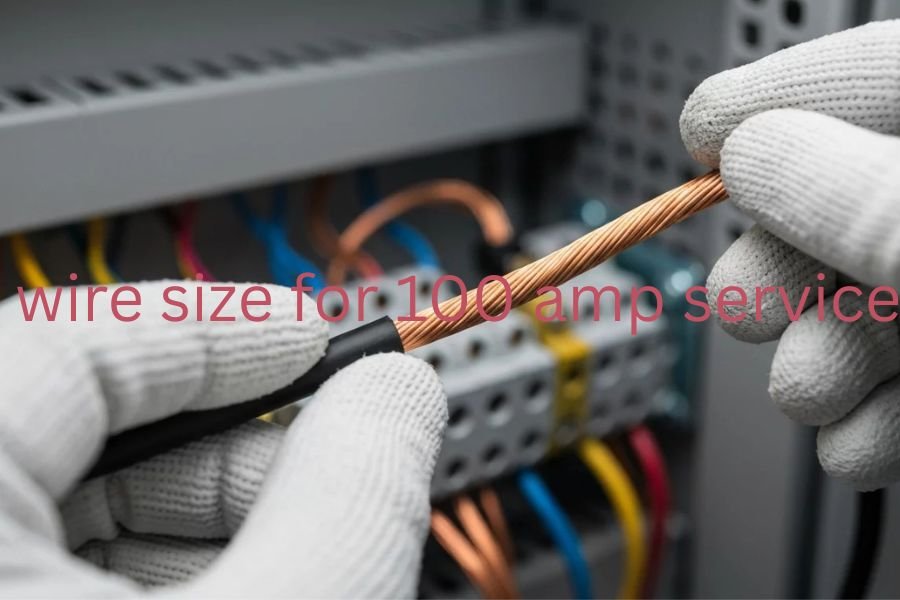
Choosing the correct wire size for a 100 amp service is critical for ensuring safety, efficiency, and code compliance. Wire size determines the amount of electrical current a wire can safely carry without overheating or causing voltage drops. Using an undersized wire can lead to serious hazards, including fire risk and equipment damage. Conversely, using an oversized wire can be unnecessarily expensive and cumbersome. Understanding how wire size is determined, including factors like material, distance, and amperage, helps homeowners and electricians select the right wire for their specific application.
For a 100 amp electrical service, the NEC minimum wire size is #3 AWG copper or #1 AWG aluminum, with larger sizes required for longer distances to limit voltage drop. Copper offers better conductivity and durability, while aluminum is a more affordable option that needs a larger gauge. Always consider distance, temperature, and local code requirements, and consult a licensed electrician for safe, compliant installation.
In this article, we discuss the topic of “wire size for 100 amp service“.
What Does 100 Amp Service Mean?
A 100 amp service refers to the maximum current that an electrical panel or circuit can safely handle at any given time. It is a common service size for smaller to mid-sized residential homes, apartments, and certain small commercial spaces. A 100 amp service is capable of supplying power to multiple circuits and standard appliances such as ovens, air conditioning units, and laundry machines. It is essential to understand that the service rating reflects the capacity of the system, not the current draw, and choosing the proper wire size ensures the panel operates within safe limits.
Importance of Choosing the Correct Wire Size
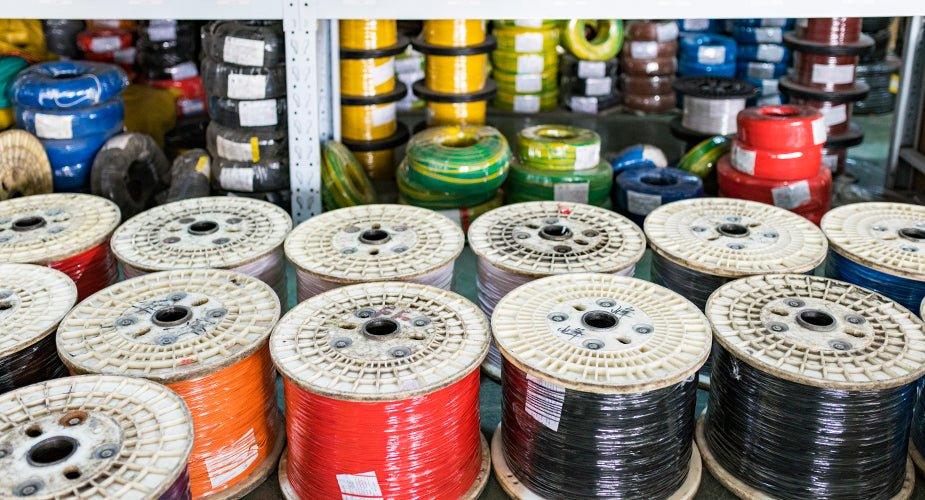
Selecting the correct wire size is more than just meeting code—it is a safety issue. Wires that are too small for the amperage can overheat, melt insulation, and even cause fires. On the other hand, excessively large wires can be difficult to handle, add unnecessary cost, and may not fit properly in breakers or conduits. Proper wire sizing also ensures that electricity flows efficiently with minimal voltage drop, which can protect appliances from damage and improve system longevity. Following the NEC and local regulations ensures compliance and safety.
How Wire Size Affects Safety and Efficiency
Wire size directly impacts both electrical safety and operational efficiency. If a wire is too small, resistance increases, causing heat buildup, which can degrade insulation over time. This can also reduce the voltage reaching your appliances, making them operate inefficiently or potentially causing damage. On the other hand, the correct wire size minimizes energy loss, ensures stable voltage, and reduces the likelihood of overheating. Therefore, carefully selecting wire size is a crucial step in planning any 100 amp service installation.
NEC Recommendations for 100 Amp Service Wire
The National Electrical Code (NEC) provides minimum guidelines for wire size to ensure safe operation. For a 100 amp service, the NEC typically recommends using #3 AWG copper or #1 AWG aluminum wire for standard service panels. However, this is the minimum requirement, and the wire size may need to be increased depending on factors such as run length, ambient temperature, and specific load requirements. Following NEC recommendations ensures compliance with national safety standards.
Factors That Determine the Correct Wire Size
Several factors influence the appropriate wire size for a 100 amp service. These include the type of wire material (copper vs. aluminum), distance of the wire run, total load or amperage, environmental temperature, and whether the wire is installed in conduit or direct burial. Understanding each factor allows electricians and homeowners to select a wire that maintains safety, efficiency, and longevity while avoiding unnecessary oversizing or undersizing.
Distance and Voltage Drop Considerations
The length of the wire run significantly impacts the choice of wire size. Longer distances increase resistance, causing voltage drop that can reduce the efficiency of electrical devices. For example, a 100-foot run may require a larger gauge than a 50-foot run to maintain proper voltage. Minimizing voltage drop is crucial for ensuring appliances operate effectively, avoiding damage, and maintaining energy efficiency.
Copper vs. Aluminum Wire for 100 Amp Service
Copper and aluminum are the two most common wire materials used for 100 amp service. Copper is preferred for its higher conductivity, lower resistance, and longer lifespan, but it is more expensive. Aluminum wire is lighter and more affordable but has lower ampacity and may require a larger gauge to carry the same current. Both materials are acceptable for 100 amp service if installed correctly and according to code, but copper often provides a more durable and reliable solution.
Ampacity Explained: How Much Current Can a Wire Handle?
Ampacity is the maximum amount of current a wire can safely carry without overheating. It depends on the wire’s material, gauge, insulation type, and installation environment. For instance, #3 AWG copper wire has a typical ampacity of 100 amps, while #1 AWG aluminum wire can also safely carry 100 amps. Understanding ampacity ensures that the selected wire can handle the electrical load without risk of overheating or voltage drop, maintaining safe and efficient operation.
Common Applications for 100 Amp Service
A 100 amp service is typically used in mid-sized residential homes, smaller commercial buildings, and detached structures like garages, workshops, and sheds. It is sufficient for powering multiple household appliances, lighting, heating, and air conditioning systems. In addition, 100 amp service is often used for RVs, mobile homes, and temporary construction power, making it a versatile and widely applicable service size.
Wire Size Chart for 100 Amp Service (Copper and Aluminum)
A wire size chart is an essential tool for selecting the proper gauge for 100 amp service. Copper and aluminum wires have different capacities, and a chart helps you match the wire to the required load. Typically, #3 AWG copper and #1 AWG aluminum are standard for 100 amp circuits, but adjustments may be needed for long runs or specific installation conditions. A wire size chart also considers insulation type, ambient temperature, and installation method, making it a valuable reference for safe and efficient electrical design.
What Gauge Wire for 100 Amp Service at Different Distances
The gauge of wire for a 100 amp service depends on how far the wire runs from the main panel to the sub-panel or appliance. For distances under 100 feet, #3 AWG copper or #1 AWG aluminum is generally sufficient. For longer distances, such as over 150 feet, increasing the gauge to #2 AWG copper or #1/0 AWG aluminum may be necessary to minimize voltage drop. Calculating wire gauge based on distance ensures the circuit operates efficiently and appliances function correctly without power loss.
Minimum Wire Size Required for 100 Amp Breaker
The minimum wire size for a 100 amp breaker is defined by the NEC to ensure safe operation. For copper wires, the minimum is #3 AWG, and for aluminum wires, it is #1 AWG. These sizes assume standard temperature ratings and typical residential or commercial conditions. Any special conditions, such as high ambient temperatures or long runs, may require upsizing the wire to maintain safe voltage and prevent overheating.
How Far Can You Run 100 Amp Service Wire?
The maximum distance you can run 100 amp service wire depends on wire gauge, material, and allowable voltage drop. For instance, #3 AWG copper may handle up to 100 feet efficiently, but beyond that, voltage drop could affect performance. Aluminum wires may require even larger sizes for longer runs. Using proper calculations and considering both distance and voltage drop ensures your circuit delivers consistent and safe power to all connected loads.
Best Wire Size for 100 Amp Sub-Panel in a Detached Garage
When installing a 100 amp sub-panel in a detached garage, the best wire size depends on distance, load, and installation type. For most residential setups, #3 AWG copper or #1 AWG aluminum is sufficient for runs up to 100 feet. If the garage is farther away, upsizing the wire to #2 AWG copper or 1/0 AWG aluminum may be necessary. Direct burial cables, conduit installation, and voltage drop considerations all influence the final choice.
Wire Size for 100 Amp Sub-Panel 50, 100, and 150 Feet Away
Wire size varies based on distance to maintain efficiency and minimize voltage drop. For a 50-foot run, standard #3 AWG copper or #1 AWG aluminum is adequate. At 100 feet, consider #2 AWG copper or 1/0 AWG aluminum. For 150 feet or longer, larger sizes may be required, and consulting a voltage drop calculator or an electrician is recommended. Proper sizing ensures safe and reliable operation of the sub-panel and connected devices.
Ground Wire Size for 100 Amp Service
Grounding is a critical safety component of any 100 amp service. The ground wire size ensures that in the event of a fault, electricity has a safe path to the earth. Typically, 8 AWG copper or 6 AWG aluminum ground wires are used for a 100 amp service. Proper grounding prevents electrical shock, protects equipment, and ensures compliance with the NEC. Always check local codes, as some jurisdictions may have stricter requirements.
Conduit Size Needed for 100 Amp Wire
Conduit protects electrical wires and ensures safe installation. The size of the conduit depends on the wire gauge and the number of conductors. For example, a 1-inch PVC or EMT conduit is commonly used for #3 AWG copper or #1 AWG aluminum carrying 100 amps. If multiple wires are run together, a larger conduit may be necessary to prevent overheating and allow easy pulling of the wires. Proper conduit sizing also ensures compliance with NEC fill capacity rules.
Voltage Drop Calculator for 100 Amp Circuits
Voltage drop is a critical factor in wire sizing. A voltage drop calculator helps determine the proper wire gauge based on distance, amperage, and material. Excessive voltage drop can lead to dimmed lights, inefficient appliances, or equipment damage. For a 100 amp service, keeping voltage drop below 3% is recommended. Using a calculator ensures accurate selection of wire size, preventing underperforming circuits and maintaining system safety.
How Temperature Affects Wire Size Selection
Ambient temperature affects the ampacity of wires. Higher temperatures reduce a wire’s current-carrying capacity, which may require upsizing the wire. For example, a #3 AWG copper wire rated for 100 amps at 30°C may need to be increased for areas with higher ambient temperatures. Aluminum wires are more sensitive to temperature changes than copper. Considering temperature ratings during wire selection ensures that the 100 amp service operates safely under all environmental conditions.
Types of Copper Wire Used for 100 Amp Service

Copper wire is the most commonly used material for 100 amp service due to its high conductivity, durability, and reliability. There are several types of copper wire suitable for this application, including THHN, THWN-2, XHHW, SER, and USE-2. Each type has unique characteristics such as insulation material, heat resistance, and suitability for indoor, outdoor, or underground installation. Choosing the correct type depends on factors like whether the wire will be in conduit, buried, or exposed to moisture and temperature fluctuations. Copper wire generally requires a smaller gauge than aluminum for the same current capacity, making it easier to handle in tight spaces.
#3 AWG Copper Wire for 100 Amp Service
#3 AWG copper wire is often the standard choice for a 100 amp service panel, especially for typical residential applications. It has sufficient ampacity to handle 100 amps at standard temperatures and provides a reliable pathway for electricity. This wire type works well in both conduit and panel installations. For shorter runs under 100 feet, #3 AWG copper is usually adequate, offering excellent conductivity while remaining cost-effective. It also meets the NEC minimum requirements, ensuring compliance and safety in most homes and small commercial buildings.
#2 AWG Copper Wire for 100 Amp Panels
#2 AWG copper wire is a slightly larger option, often used for longer wire runs or installations where voltage drop may become a concern. Increasing the gauge reduces resistance and improves efficiency, especially in runs exceeding 100 feet. #2 AWG copper is suitable for main panels, sub-panels, and applications requiring higher reliability and less heat buildup. While slightly more expensive than #3 AWG, it ensures safe and stable power delivery, making it ideal for future-proofing or handling additional electrical loads in larger homes.
1 AWG Copper Wire for Long-Distance 100 Amp Service
For exceptionally long runs of 100 amp service, such as 150–200 feet or more, 1 AWG copper wire may be required. This larger gauge minimizes voltage drop and prevents overheating over extended distances. Using 1 AWG copper wire also provides a higher safety margin, reducing stress on electrical panels and connected devices. While installation may be slightly more challenging due to its thickness, the long-term benefits in efficiency and reliability often outweigh the extra cost and labor. It is commonly used for detached garages, workshops, or commercial applications.
Copper THHN and XHHW Wire Options for 100 Amp Circuits
THHN and XHHW are popular copper wire types for 100 amp circuits. THHN (Thermoplastic High Heat Nylon-coated) is widely used in conduit for residential and commercial wiring, offering heat and moisture resistance. XHHW (Cross-linked High Heat Water-resistant) is ideal for higher temperature environments and is also suitable for wet locations, making it versatile for underground or exposed installations. Both types ensure safe operation, minimize resistance, and are compliant with NEC standards, making them reliable options for a 100 amp service.
Benefits of Using Copper for 100 Amp Electrical Service
Copper wire offers numerous advantages for 100 amp service installations. It has superior conductivity, which reduces energy loss and improves efficiency. Copper is highly durable and resistant to corrosion, ensuring long-term reliability even in harsh environments. It also handles high temperatures better than aluminum, reducing the risk of overheating. While more expensive, copper requires a smaller gauge than aluminum to carry the same current, simplifying installation and improving flexibility in tight spaces. Overall, copper provides the safest and most efficient solution for most residential and small commercial applications.
Cost Comparison: Copper vs. Aluminum Wiring
When comparing copper and aluminum wiring for 100 amp service, cost is a major consideration. Copper is more expensive upfront but provides higher efficiency, durability, and a smaller wire gauge. Aluminum is less costly and lighter, which can reduce labor costs during installation, but it requires a larger gauge to achieve the same ampacity as copper. Aluminum is also more prone to oxidation, which can affect connections over time. The choice between the two often balances initial budget, long-term reliability, and ease of installation for the specific project.
Types of Aluminum Wire Used for 100 Amp Service
Aluminum wire is a popular alternative to copper for 100 amp service because it is lightweight and affordable. Common types include XHHW-2, SER, USE-2, and triplex URD cables. Each type has its specific use, such as conduit installation, direct burial, or overhead service. Aluminum wire typically has lower conductivity than copper, so it requires a larger gauge for the same amperage. Choosing the correct type ensures safety, compliance with NEC standards, and reliable operation of electrical panels and appliances.
#1 AWG Aluminum Wire for 100 Amp Panels
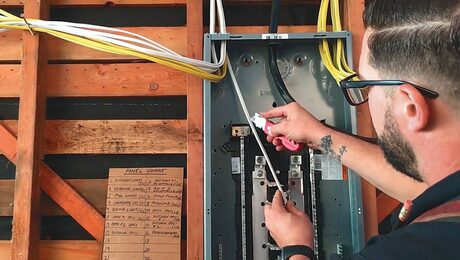
#1 AWG aluminum wire is generally recommended for standard 100 amp service panels. It provides sufficient ampacity to safely carry 100 amps under normal residential conditions. Like copper, aluminum wire comes in different insulation types suitable for indoor, outdoor, or underground use. While slightly larger and more flexible than equivalent copper wire, #1 AWG aluminum is cost-effective and widely used in detached buildings, sub-panels, and other residential installations. Proper termination and anti-oxidation measures are crucial for safe use.
2-2-2-4 Aluminum SER Cable for 100 Amp Service
2-2-2-4 aluminum SER (Service Entrance) cable is a popular multi-conductor option for 100 amp service panels. It includes three current-carrying conductors and a neutral wire, making it suitable for both main and sub-panel connections. SER cable can be run indoors, in conduit, or in areas requiring flexibility. It is ideal for residential homes, garages, and small commercial buildings. Proper installation and grounding are essential to ensure safe operation and NEC compliance, making 2-2-2-4 aluminum SER cable a versatile and widely used solution for 100 amp service.
Conclusion
Choosing the correct wire size for a 100 amp service is essential for safety, efficiency, and code compliance. Both copper and aluminum wires are commonly used, each with its own advantages and considerations. Copper offers superior conductivity, durability, and smaller gauge requirements, while aluminum provides a lighter and more cost-effective alternative. Factors such as wire material, distance, voltage drop, ambient temperature, and future expansion must all be considered when selecting the proper wire size. Consulting the National Electrical Code (NEC) and a licensed electrician ensures the right choice for your home, garage, or commercial space. Proper wire selection not only prevents hazards like overheating and fire but also maintains the longevity and efficiency of your electrical system.
FAQs
1. What is the minimum wire size for a 100 amp service?
For copper wires, the minimum is typically #3 AWG, and for aluminum wires, it is #1 AWG. Longer runs may require larger sizes to prevent voltage drop.
2. Can I use aluminum wire instead of copper for 100 amp service?
Yes, aluminum is a cost-effective alternative, but it requires a larger gauge to carry the same current as copper and must be properly installed to prevent oxidation and overheating.
3. How far can I run 100 amp service wire before voltage drop becomes a problem?
Typically, #3 AWG copper can run up to 100 feet efficiently. Beyond that, upsizing the wire is recommended to minimize voltage drop and maintain efficiency.
4. What types of copper wire are suitable for 100 amp service?
THHN, THWN-2, XHHW, SER, and USE-2 are common copper wire types, each suitable for different installations such as conduit, underground, or indoor use.
5. What types of aluminum wire are used for 100 amp service?
XHHW-2, SER, USE-2, and triplex URD cables are widely used. Proper gauge selection is critical due to aluminum’s lower conductivity compared to copper.
6. What size ground wire do I need for a 100 amp service?
Typically, an 8 AWG copper or 6 AWG aluminum ground wire is used for a 100 amp service, but always checks local codes for compliance.
7. Can I use a 100 amp wire for a 200 amp service?
No. A 100 amp wire cannot safely handle 200 amps. Using undersized wire can cause overheating, fire hazards, and code violations.
8. What conduit size do I need for 100 amp service wire?
A 1-inch PVC or EMT conduit is commonly used for single #3 AWG copper or #1 AWG aluminum wires. Larger conduits are required if multiple wires are run together.
9. How does temperature affect wire sizing?
Higher ambient temperatures reduce a wire’s ampacity. You may need to increase the wire gauge to ensure safe operation in hot environments.
10. Should I hire a professional electrician to install 100 amp service?
Yes. Installing a 100 amp service requires knowledge of NEC codes, wire sizing, and proper safety practices. A licensed electrician ensures safe and compliant installation.
Keep an eye for more latest news & updates on premiumtechy!