If you’ve ever wondered whether a 10 gauge wire can safely handle 40 amps, you’re not alone. Many DIYers and homeowners face this question when wiring appliances or circuits. Electrical safety heavily depends on wire gauge and amp rating. Using the wrong wire size can lead to overheating, damaged circuits, or even fire hazards. In this guide, we’ll dive deep into how wire gauge affects amperage and what you should know before using a 10 gauge wire for a 40-amp load.
According to the National Electrical Code (NEC), the maximum safe ampacity (current capacity) for 10 AWG copper wire is 30 amps. This means it is suitable for 30-amp circuits, such as those used for water heaters, dryers, or small air conditioners.
We talk about “Can 10 Gauge Wire Handle 40 Amps? Complete Guide” in this article.
Understanding Wire Gauge Basics
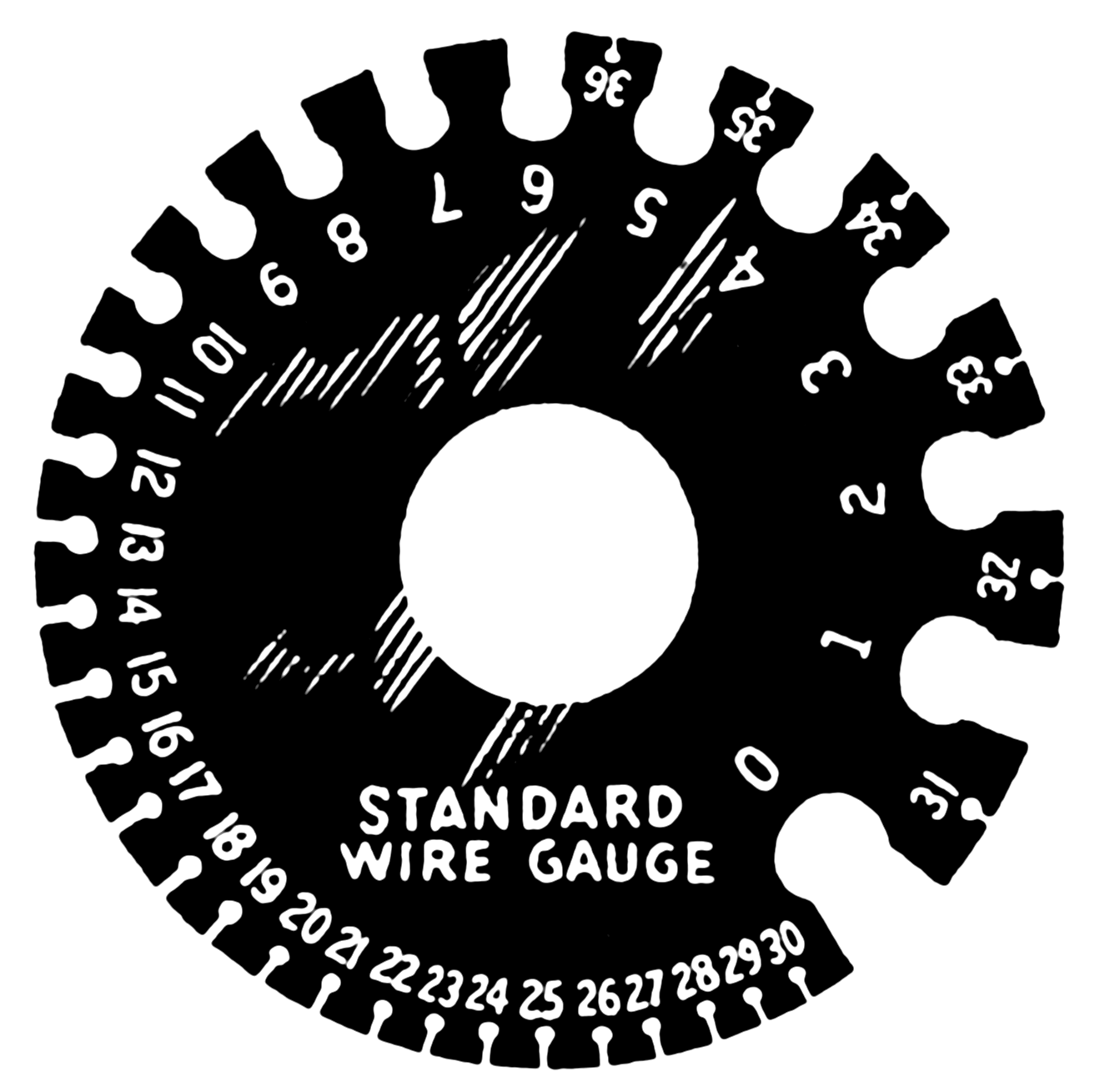
A wire gauge measures the wire’s diameter or thickness. In the American Wire Gauge (AWG) system, smaller numbers represent thicker wires that can carry more current. For instance, 10 gauge wire is thicker than 12 gauge but thinner than 8 gauge. The wire’s capacity to carry current depends on its thickness, material (usually copper or aluminum), insulation type, and ambient temperature.
What Is a 10 Gauge Wire?
A 10 gauge wire is commonly used for 30-amp circuits in residential wiring. It’s typically made of copper and suitable for mid-range electrical appliances such as electric dryers, air conditioners, or water heaters. While strong, it has limitations when it comes to handling higher amperage loads like 40 amps.
Ampacity Explained
Ampacity refers to the maximum amount of electrical current (in amps) that a wire can safely carry without overheating. The ampacity of a wire depends on its size, the surrounding temperature, and insulation type. Exceeding a wire’s ampacity can cause heat buildup, melting insulation, or electrical fires.
The Relationship Between Wire Size and Amperage
Think of wire size like a highway: the wider the highway, the more traffic (or current) it can handle. A smaller wire means a narrower “road” for electricity to travel through, which creates resistance and heat. Larger wires (with smaller AWG numbers) can handle more amperage safely.
Can 10 Gauge Wire Handle 40 Amps?
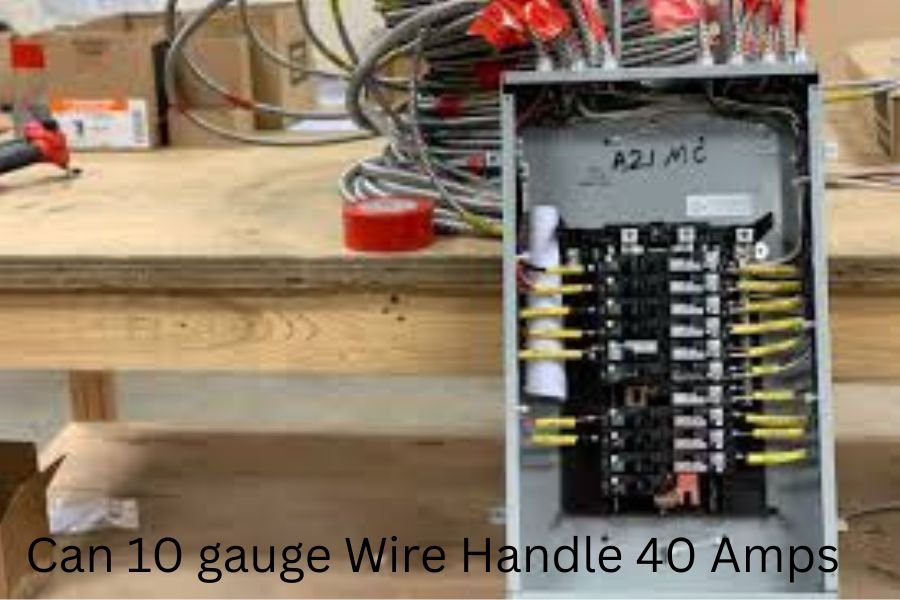
In general, 10 gauge wire cannot safely handle 40 amps. According to the National Electrical Code (NEC), a 10 gauge copper wire is rated for 30 amps under standard conditions. While it might temporarily carry 40 amps, it’s not safe for continuous use at that load.
Why 10 Gauge Wire Is Not Ideal for 40 Amps
Running 40 amps through a 10 gauge wire can cause excessive heat buildup, potentially melting insulation or damaging connected equipment. Continuous overload may even trigger circuit breakers or, in worse cases, cause electrical fires. Always size wires according to the circuit’s load requirements.
Maximum Amp Rating for 10 Gauge Wire
Here’s how different insulation temperatures affect ampacity:
- 60°C insulation: 30 amps
- 75°C insulation: 35 amps
- 90°C insulation: 40 amps (only under special conditions and not for general use)
Even though 10 gauge wire with 90°C insulation can theoretically handle 40 amps, it’s still not recommended for most household or commercial circuits.
Temperature Rating and Its Role
Temperature rating indicates how hot the wire’s insulation can safely get. A wire with a higher temperature rating can carry more current, but only if the entire system (breakers, connectors, and devices) supports that rating. Otherwise, the weakest component limits the ampacity.
Voltage Drop and Its Impact
When current flows through a wire, some voltage is lost due to resistance. This is called voltage drop, and it increases with wire length. High voltage drops can reduce appliance performance or cause overheating, especially when wires are undersized for the load.
Common Uses of 10 Gauge Wire
10 gauge wire is commonly used for:
- 30-amp circuits
- Water heaters
- Clothes dryers
- Window air conditioners
- Baseboard heaters
These appliances typically require 240 volts and moderate current, making 10 gauge wire ideal for them.
Gauge Wire in Automotive Applications
In vehicles, 10 gauge wire is used for medium-load circuits like power inverters, amplifiers, and auxiliary lighting. However, automotive systems operate on 12 volts, so current calculations differ—but still, it’s not suitable for continuous 40-amp loads.
Gauge Wire in Industrial Use

Industrial settings typically demand thicker wires due to continuous high-current usage. A 10 gauge wire would be underpowered for 40 amps in such applications, and 8 gauge or even 6 gauge wires are preferred instead.
When Is It Safe to Use 10 Gauge Wire?
You can safely use 10 gauge wire if:
- The circuit draws no more than 30 amps.
- The wire run is short.
- The insulation and breaker ratings match the wire capacity.
- It’s installed according to local electrical codes.
What Happens If You Overload 10 Gauge Wire?
Overloading a 10 gauge wire causes it to overheat. Prolonged exposure to high temperatures may damage insulation, leading to short circuits or fire hazards. It can also degrade wire performance and shorten its lifespan.
Signs of Wire Overheating
Watch for these warning signs:
- Warm outlets or switches
- Flickering lights
- Burning smell near electrical panels
- Tripped breakers or blown fuses
If any of these occur, stop using the circuit and have it inspected by an electrician.
Fire Hazards Related to Wire Overload
Overloaded circuits are among the most common causes of electrical fires. When wire insulation melts, it can ignite nearby materials, creating a serious safety hazard. Always ensure your wire size matches your circuit’s amperage.
Choosing the Right Wire Size for 40 Amps
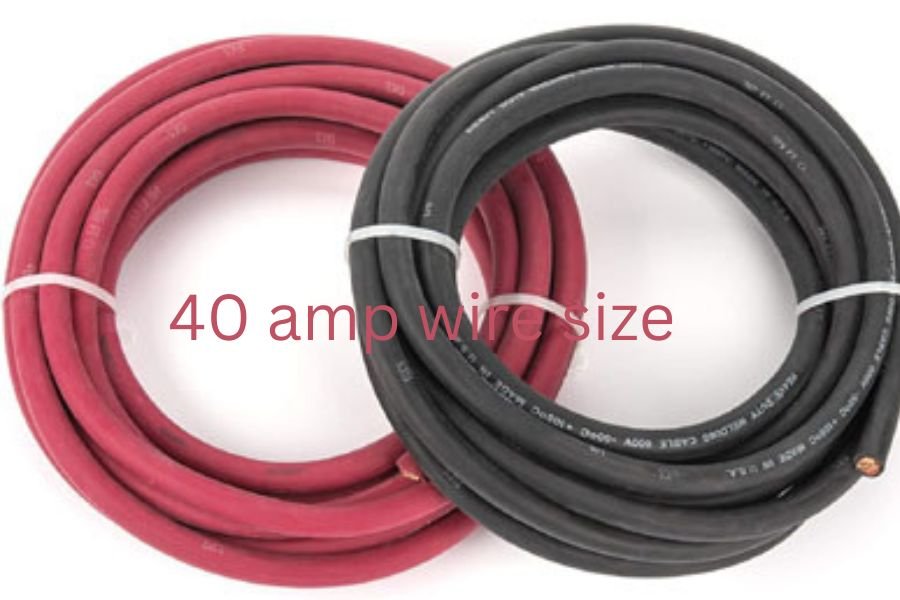
The correct wire size for 40 amps is 8 gauge copper wire. If the circuit run exceeds 100 feet, you may need to step up to a 6 gauge wire to minimize voltage drop and ensure efficiency.
Recommended Wire Gauge for 40 Amps
| Wire Gauge (AWG) | Ampacity | Recommended Use |
| 10 AWG | 30 amps | Moderate appliances |
| 8 AWG | 40 amps | 40-amp circuits |
| 6 AWG | 55 amps | Long wire runs or high loads |
Copper vs. Aluminum Wire for 40 Amps
Copper wire offers better conductivity, flexibility, and longevity, making it ideal for most installations. Aluminum wire, on the other hand, is cheaper but less efficient—it requires a larger size to carry the same current safely (e.g., 6 AWG aluminum for 40 amps).
Insulation Types and Their Importance
The type of insulation affects where the wire can be safely used:
- THHN – For dry indoor locations
- THWN – For wet or damp areas
- UF-B – For underground or outdoor installations
Always select insulation suitable for the environment and circuit conditions.
How Distance Affects Wire Capacity
The longer the wire, the greater the resistance and voltage drop. As distance increases, thicker wires are necessary to maintain power and prevent overheating. For long runs over 100 feet, use 6 gauge instead of 8 gauge wire for 40 amps.
Voltage Drop Over Long Distances
Voltage drop can affect performance, especially in sensitive equipment. A 3% voltage drop is generally acceptable. For longer runs, upsizing the wire gauge ensures consistent voltage and current flow.
Electrical Code Requirements
The NEC (National Electrical Code) outlines proper wire sizes for specific loads. According to the NEC, 10 gauge wire is rated for 30 amps, not 40. Always follow local codes and permit requirements before installation.
How to Safely Upgrade Your Wiring
To safely upgrade a circuit for 40 amps:
- Replace 10 gauge with 8 gauge copper wire.
- Install a 40-amp breaker.
- Ensure proper grounding.
- Use approved connectors and insulation.
- Test the circuit after installation.
Tools Needed for Wire Installation
For wire installation, you’ll need:
- Wire cutters and strippers
- Screwdrivers
- Voltage tester
- Circuit breaker
- Wire connectors
- Electrical tape
Always use quality tools and protective gear for safe installation.
Professional vs. DIY Electrical Work

While simple wiring can be done by experienced DIYers, handling 40-amp circuits requires expertise. A licensed electrician ensures the work meets code, reducing risks of accidents or electrical fires.
Safety Tips for Handling Electrical Wiring
- Turn off the main power before starting.
- Wear rubber gloves and safety goggles.
- Double-check amperage ratings.
- Never mix aluminum and copper without proper connectors.
- Test circuits after wiring.
Conclusion
So, can 10 gauge wire handle 40 amps? Not safely. It’s only rated for 30 amps, and using it for 40 amps risks overheating and fire. For any 40-amp circuit, always use 8 gauge copper wire (or 6 gauge for long distances). Following electrical codes and safety standards ensures reliable performance and peace of mind.
FAQs
1. Can I use 10 gauge wire on a 40-amp breaker?
No, it’s unsafe and violates electrical code. Use 8 gauge wire instead.
2. What gauge wire do I need for a 40-amp circuit?
You need 8 AWG copper or 6 AWG aluminum wire.
3. Can 10 gauge wire handle 35 amps?
Only under certain conditions, but 30 amps is the recommended safe limit.
4. What happens if I overload a 10 gauge wire?
It will overheat, damage insulation, and could cause fire.
5. What is the best wire for long 40-amp runs?
Use 6 gauge copper wire to minimize voltage drop.
Keep an eye for more latest news & updates on premiumtechy!