Wire welder gas, often called shielding gas, is a protective gas used in wire welding processes like MIG (Metal Inert Gas) welding. Its primary purpose is to shield the molten weld pool from atmospheric contaminants such as oxygen, nitrogen, and moisture. Without shielding gas, the weld becomes porous, weak, and brittle. Wire welder gas ensures clean, stable, and high-quality welds with reduced spatter. Different gases offer different weld characteristics, making gas selection a key factor in welding performance.
Wire welder gas is used to shield the molten weld from oxygen, moisture, and other air contaminants that can weaken the joint. The correct gas improves arc stability, controls spatter, and enhances weld penetration and appearance. Choosing the right shielding gas and flow rate ensures stronger, cleaner, and more consistent welding results.
In this article, we discuss the topic of “Wire Welder Gas“.
How Gas Is Used in Wire Welding
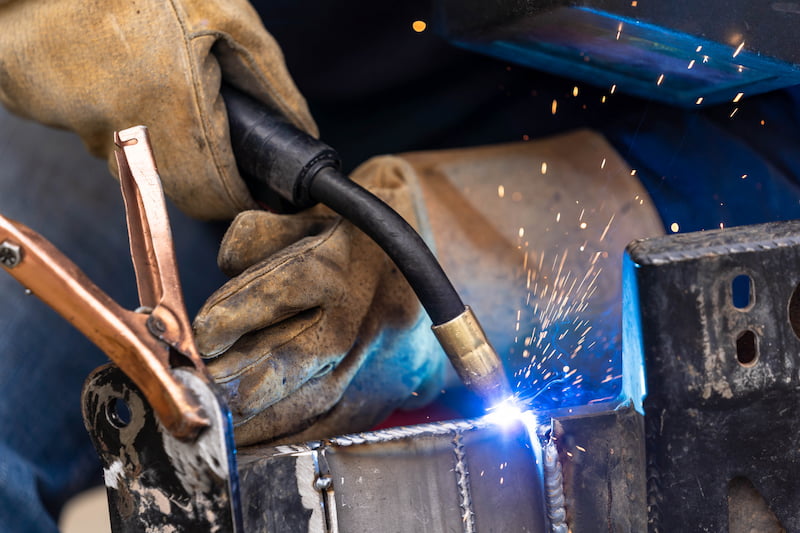
In wire welding, the shielding gas flows through a hose connected to the welding torch, creating a protective bubble around the arc. This prevents chemical reactions with air that can damage the weld. The gas allows the arc to stay stable while ensuring smooth metal deposition. Gas coverage also affects penetration, bead shape, and overall weld appearance. Since the shielding envelope must remain uninterrupted, maintaining proper flow rate and torch angle is crucial for effective welding. When used correctly, gas dramatically enhances weld quality and consistency.
Types of Shielding Gas for Wire Welders
Common shielding gases for wire welders include Argon, Carbon Dioxide (CO₂), Argon-CO₂ mixtures, Helium blends, and specialty gas mixtures. Argon provides a smooth arc and low spatter, making it ideal for stainless steel and aluminum. CO₂ is inexpensive and provides deep penetration but produces more spatter. Argon-CO₂ mixes combine stability and penetration while reducing splatter. Helium mixtures enhance heat input for thicker materials. The gas type depends on material, desired penetration, bead shape, and budget. Each gas offers unique advantages based on the application.
CO₂ Gas vs. Argon for Wire Welding
CO₂ and Argon are the two most widely used gases in wire welding. CO₂ is cheaper and delivers deep penetration but results in more spatter and a rougher arc. Argon provides a smooth, stable arc with minimal spatter, making it suitable for precision welding. CO₂ is preferred for structural steel work, while Argon is better for thinner materials and cleaner welds. Argon also enhances puddle control for beginners. The choice ultimately depends on cost, performance needs, and the specific welding application.
Why Shielding Gas Matters in Wire Welding
Shielding gas is essential for producing strong welds because it prevents atmospheric contamination. Even small amounts of oxygen or moisture can cause porosity, cracking, and poor penetration. Gas also affects heat input, puddle fluidity, weld bead appearance, and spatter levels. A stable and well-chosen shielding gas improves arc performance, reduces cleanup time, and boosts productivity. Without shielding gas, wire welding would result in weak, unstable welds unsuitable for professional or structural work.
How to Choose the Right Gas for Your Wire Welder
Selecting the correct gas depends on several factors: metal type, thickness, welding machine capability, and desired weld appearance. For mild steel, CO₂ or a 75/25 Argon-CO₂ mix works great. For stainless steel, Argon with small amounts of CO₂ or Oxygen is preferred. Aluminum requires pure Argon or an Argon-Helium blend. Budget, penetration requirements, and spatter tolerance also influence gas selection. Understanding your project needs helps narrow down the best gas for consistent, high-quality results.
MIG Welding Gas Options for Beginners
Beginners usually start with 75% Argon / 25% CO₂, commonly known as C25 gas. It offers the perfect balance of penetration, ease of use, and low spatter. Pure CO₂ is cheaper but harder for newcomers due to increased spatter and arc instability. Pure Argon is simple to use but mostly limited to aluminum and stainless steel. Beginners should focus on gases that provide stable arcs, smooth puddle control, and predictable results to build skill and confidence.
Best Gas Mixtures for Wire Welding
The best gas mixtures depend on the metal and the desired performance. C25 (75/25 Argon-CO₂) is ideal for general steel welding because it balances cost and arc quality. Argon-Helium blends are excellent for thick aluminum due to increased heat. Tri-mix gases (Argon, CO₂, Helium) work well for stainless steel to minimize oxidation. Each mixture is engineered to improve certain welding characteristics such as penetration, arc smoothness, or spatter control. Choosing the best mixture dramatically affects weld quality.
How Shielding Gas Affects Weld Quality
Shielding gas determines how the weld puddle forms, how the arc behaves, and how clean the final weld looks. Poor shielding leads to porosity, cracking, undercutting, and excessive spatter. Proper gas coverage results in smooth, shiny weld beads with good penetration and strong fusion. Even small changes in gas flow or mixture can dramatically alter weld outcomes. Consistent, high-quality welds require proper gas selection, flow adjustment, and torch technique.
Gas Flow Rate Settings for Wire Welders
Typical gas flow rates for wire welding range from 15–25 CFH (cubic feet per hour). Too little gas results in porosity, while too much creates turbulence that sucks air into the weld. Indoor welding generally requires lower flow rates, whereas outdoor welding may need slightly higher rates to overcome air movement. The correct rate depends on nozzle size, metal thickness, and position. Using a flow meter ensures precise gas delivery for optimal shielding.
How Temperature Affects Wire Welder Gas Performance
Extreme temperatures alter gas density and flow behavior, impacting weld quality. Cold temperatures increase gas density, requiring adjustments to maintain proper shielding. Hot climates may reduce gas coverage due to excessive expansion and turbulence. Gas cylinders stored in the sun can experience pressure spikes, reducing regulator performance. Temperature can also affect condensation inside hoses. Understanding thermal effects ensures stable gas delivery and prevents welding inconsistencies caused by environmental factors.
Wire Welding With and Without Gas
Wire welding with gas (MIG) produces clean, stable welds with minimal spatter. Shielding gas protects the weld pool and keeps contaminants away, resulting in strong joints. Welding without gas typically involves flux-core wire, which contains internal flux that creates its own shielding. While convenient, flux-core welding produces more spatter and requires additional cleanup. Gasless welding is ideal for outdoor and windy environments where gas shielding would fail. Each method is suited for specific situations and skill levels.
fferences Between Gas MIG and Flux-Core Welding
MIG welding uses external shielding gas, resulting in cleaner, smoother welds. Flux-core welding uses tubular wire filled with flux that releases shielding gas when heated. MIG welding produces less spatter and is ideal for thinner materials, while flux-core offers deeper penetration for thicker steel. MIG requires gas cylinders, regulators, and indoor conditions, whereas flux-core is portable and weather-resistant. Both methods have strengths depending on project requirements and working environments.
When to Use Pure Argon for Wire Welding
Pure Argon is primarily used for welding aluminum and non-ferrous metals. Its inert properties create a smooth arc and excellent puddle control, essential for soft metals like aluminum. Pure Argon also helps produce aesthetically pleasing welds with minimal oxidation. It is occasionally used on stainless steel with specific wire types. Pure Argon is not recommended for mild steel because it creates poor penetration and unstable arcs. Only certain applications benefit from this specialized gas.
CO₂-Only Gas: Pros and Cons for Wire Welding
Pure CO₂ is highly economical and provides deep weld penetration, making it popular for structural or heavy-duty steel work. However, it produces more spatter, a harsher arc, and requires additional cleanup. CO₂ can also result in a less stable arc compared to Argon-mixed gases. Despite these drawbacks, it is favored in industrial environments where cost efficiency and strong penetration are top priorities. For beginners or precision work, mixed gases are usually better.
Argon-CO₂ Mixes: What Welders Should Know
Argon-CO₂ mixes like 75/25, 80/20, and 90/10 are widely used due to their balance of cost, arc stability, and weld quality. Higher Argon percentages create smoother arcs and less spatter, while higher CO₂ levels improve penetration. These mixes are ideal for mild steel, stainless steel, and some speciality applications. The correct ratio depends on material thickness and desired weld characteristics. Argon-CO₂ mixes are considered the best all-around shielding gases for wire welders.
Gas Cylinder Sizes for Wire Welders
Gas cylinders come in multiple sizes, including 20, 40, 80, 125, and 150 cubic feet capacities. Larger cylinders last longer and are more cost-effective but heavier and harder to transport. Smaller cylinders are convenient for hobbyists or portable projects but need frequent refills. Choosing the right cylinder size depends on welding frequency, mobility needs, and shop setup. Understanding cylinder capacities helps reduce downtime and improve workflow efficiency.
How Long Does Wire Welder Gas Last?
The longevity of a gas cylinder depends on welding duration, flow rate, and cylinder size. For example, using 20 CFH on a 125-cu-ft cylinder provides roughly 6 hours of continuous welding. Beginners often waste gas due to incorrect flow rates, leaks, or improper storage. Proper regulator settings and good maintenance extend cylinder life. Tracking usage helps welders plan refills and avoid running out of gas during important projects.
Tips for Saving Shielding Gas While Welding
Welders can save gas by lowering flow rates to optimal levels, checking for leaks, and turning off valves when not in use. Using the correct nozzle size and maintaining proper torch angle improves gas efficiency. Avoid excessive gas flow, which creates turbulence and wastes gas. Indoor welding also reduces gas loss. Proper equipment maintenance and efficient welding techniques significantly reduce overall gas consumption and cost.
Setting Up Gas for Your Wire Welder
Correctly setting up gas for your wire welder ensures clean and consistent welds. The process begins by securely mounting the gas cylinder to prevent tipping. After that, the regulator is connected to the cylinder valve, and all fittings are checked for leaks. The gas hose should be properly attached to the welder and tightened without over-torquing. Once everything is connected, the cylinder is opened slowly to pressurize the regulator. Ensuring proper gas setup provides stable arc performance and long-lasting equipment.
How to Connect a Gas Cylinder to Your Wire Welder
To connect a gas cylinder, start by placing the cylinder upright and securing it with a chain or bracket. Remove the protective cap and inspect the threads for dirt or damage. Attach the regulator firmly and use a wrench to ensure a snug fit. Connect the gas hose from the welder to the regulator’s outlet, making sure it is seated correctly. Slowly open the cylinder valve to allow pressure into the system. Once connected, test for leaks with soapy water to guarantee safe operation.
Gas Pressure and Regulator Settings Explained
Regulator settings determine the pressure flow of shielding gas from the cylinder to the welding torch. The high-pressure gauge shows the cylinder’s total gas volume, while the low-pressure gauge indicates adjustable working pressure. Most MIG setups require around 15–25 CFH, depending on environment and nozzle size. Too much pressure causes turbulence, while too little leads to porosity. Proper regulator adjustment ensures smooth welding, stable shielding, and consistent penetration. Regular monitoring of gauge levels prevents interruptions and maintains weld quality.
Common Wire Welder Gas Problems and Solutions
Common gas problems include low flow, leaks, contamination, and inconsistent arc behavior. Low flow often results from clogged nozzles or incorrect regulator settings. Gas leaks usually occur at loose fittings or cracks in hoses. Contamination happens when moisture or dirty equipment compromises gas purity, causing porosity. Inconsistent arcs may signal fluctuating gas pressure or external wind interference. Checking equipment regularly, maintaining clean components, and adjusting flow rates solve most issues effectively and prevent welding defects.
How to Tell if Your Weld Needs More Gas
Signs that your weld needs more gas include porosity, excessive spatter, and discoloration around the bead. If the weld has pinholes or small dark pits, shielding is inadequate. A noisy or unstable arc also indicates poor gas coverage. Excess oxidation or a dull, rough surface suggests atmospheric contamination. Increasing flow slightly or improving torch angle restores proper shielding. Observing these indicators helps welders quickly correct gas-related issues and maintain strong, clean welds.
Causes of Gas Leaks in Wire Welders
Gas leaks often occur due to damaged hoses, worn-out O-rings, loose connections, or faulty regulators. Improperly tightened fittings can also allow gas to escape silently. Over time, hoses may crack due to heat exposure, bending, or aging. Debris in the regulator connection can prevent an airtight seal. Regular inspection and maintenance prevent leaks and save money on wasted gas. Detecting leaks early ensures safer operation and better welding performance.
How to Store Welding Gas Safely
Storing welding gas safely requires securing cylinders upright with chains or brackets to prevent tipping. They should be kept in a well-ventilated area away from heat, flames, or direct sunlight. Valve caps must remain installed when cylinders are not in use. Flammable gases should be separated from oxidizers. Cylinders should also be protected from moisture to prevent rusting. Following safe storage practices reduces the risk of accidents and prolongs cylinder life.
Wire Welding Indoors vs. Outdoors With Gas
Indoor wire welding offers controlled conditions, making shielding gas more effective with lower flow rates. Outdoors, wind and air movement can disrupt gas coverage, leading to porosity unless adjustments are made. Welders often increase flow rates or use wind guards to maintain adequate shielding outdoors. In severe weather, flux-core wire may be a better choice. Understanding the differences allows welders to adapt techniques and achieve consistent results in both environments.
Best Practices for Using Shielding Gas in Windy Areas
Wind can blow away shielding gas, causing weld contamination. To overcome this, welders should increase gas flow slightly, reduce stick-out, and maintain a proper torch angle. Wind blockers or welding tents help protect the weld zone. Lowering voltage and tightening the arc improves shielding efficiency. Using larger nozzles or gas diffusers also enhances coverage. Applying these practices ensures strong, clean welds even in outdoor or breezy conditions.
Safety Tips for Handling Wire Welder Gas Cylinders

Handling gas cylinders safely begins with always securing them upright. Never move a cylinder without a protective valve cap installed. Avoid dropping or striking cylinders since the pressurized contents can pose serious risks. Use proper lifting techniques or carts to transport them. Ensure good ventilation when opening valves, and never attempt to repair damaged cylinders yourself. Following safety guidelines reduces hazards and keeps the welding environment secure.
Wire Welder Gas Costs: What to Expect
Gas costs vary depending on the type, mixture, and cylinder size. CO₂ is usually the cheapest option, while Argon and specialty mixes cost more due to higher purity requirements. Rental or purchase fees for cylinders and refills also influence total cost. The frequency of welding determines how often cylinders need replacing. Planning usage and choosing the right gas mixture help maintain budgets while ensuring high-quality results. Understanding cost factors helps welders make smarter financial decisions.
How Gas Type Influences Welding Spatter
Spatter levels vary significantly depending on the shielding gas used. CO₂ produces more spatter because it creates a hotter, less stable arc. Argon-rich mixtures greatly reduce spatter, resulting in cleaner welds and less cleanup. Helium blends can increase spatter due to higher heat input but offer improved penetration. Choosing the right gas helps minimize waste, improves productivity, and enhances weld appearance. Managing spatter begins with selecting the correct shielding gas for the job.
Wire Welder Gas for Stainless Steel
Stainless steel welding typically uses Argon-rich gases mixed with CO₂ or Oxygen in small amounts. These blends improve arc stability while preventing excessive oxidation that can discolor stainless steel. Tri-mix gases containing Argon, Helium, and CO₂ are common for high-quality stainless applications because they provide exceptional heat control. The right gas ensures strong, corrosion-resistant welds with excellent appearance. Proper shielding gas selection is essential to maintain the integrity of stainless steel.
Gas Choices for Aluminum Wire Welding
Aluminum welding requires pure Argon due to its inert properties and smooth arc characteristics. For thicker aluminum, an Argon-Helium mix increases heat input and penetration. Helium also helps improve travel speed and bead profile. Using the wrong gas, such as CO₂, can severely damage aluminum because it reacts strongly with active gases. Gas cleanliness and precision are crucial when welding aluminum, as contamination leads to weak, porous welds.
Multi-Gas Welders: What They Are and How They Work
Multi-gas welders allow operators to switch between different shielding gases depending on the project. These machines support various metals and welding applications by using adaptable regulators, hoses, and internal controls. They are ideal for shops that work with steel, aluminum, and stainless steel regularly. Multi-gas welders improve convenience, versatility, and productivity. By adjusting settings and selecting the correct gas, welders can perform a wide range of tasks efficiently.
Understanding Gas Regulators for Wire Welders
Gas regulators control the pressure and flow of shielding gas from the cylinder to the welding torch. They consist of gauges that display cylinder pressure and working pressure. A stable regulator ensures consistent gas delivery, preventing arc problems and weld defects. Different regulators suit different gases due to varying thread designs and pressure ratings. Regular inspection and proper adjustment keep the regulator functioning safely and accurately throughout the welding process.
Recommended Gas Settings for Different Metal Thicknesses
Thin metals require lower gas flow rates and lower penetration to prevent burn-through. For thicker metals, higher flow rates and stronger penetration enhance fusion and strength. Mild steel typically needs 15–20 CFH, while outdoor welding may require slightly higher flow. Stainless steel or aluminum may need different ratios due to their unique thermal characteristics. Matching gas settings to metal thickness ensures balanced weld quality and minimal defects across varying applications.
Shielding Gas Effects on Weld Penetration
Shielding gas composition significantly affects weld penetration. CO₂ produces deep penetration suitable for thick steel. Argon-rich gases create shallower, smoother penetration ideal for thin or delicate metals. Helium increases heat input, offering deeper fusion on aluminum and stainless steel. Choosing the correct gas helps avoid undercutting, lack of fusion, or excessive penetration. Understanding how gases influence heat transfer is crucial for achieving structurally sound welds.
How Gas Affects Arc Stability in Wire Welding
Arc stability determines how smoothly the wire melts into the weld puddle. Argon provides exceptional arc stability due to its inert nature, resulting in consistent droplet transfer. CO₂ can create a harsher arc due to its reactive properties. Helium increases arc energy, creating additional heat but slightly reducing stability. Proper gas flow and torch positioning also affect stability. A stable arc ensures uniform bead appearance, reduced spatter, and stronger welds.
Troubleshooting Porosity Caused by Poor Gas Coverage
Porosity often results from insufficient shielding gas. Common causes include leaks, low flow rates, wind interference, or dirty nozzles. Inspecting hoses, fittings, and regulators helps identify leaks. Increasing gas flow or shielding the weld area reduces external interference. Cleaning the nozzle ensures unobstructed gas flow. Maintaining proper technique and equipment cleanliness is key to eliminating porosity and producing strong, reliable welds.
How to Improve Gas Coverage During Wire Welding
Improving gas coverage requires maintaining correct torch angle, reducing stick-out length, and ensuring proper flow rate. Using gas diffusers or larger nozzles enhances shielding, especially in outdoor conditions. Avoiding excessive travel speed keeps the gas envelope intact. Regularly cleaning the nozzle and checking for blockages ensures unobstructed flow. These practices help maintain a stable protective atmosphere and improve weld quality significantly.
Portable Gas Options for Wire Welders
Portable gas options are ideal for welders who need mobility for fieldwork, automotive repair, or remote welding tasks. Smaller cylinders such as 20–40 cu-ft bottles are lightweight and easy to transport, making them perfect for short-duration jobs. While they hold less gas, they provide enough shielding for hobbyists or light professional work. Portable systems often come with compact regulators and hoses optimized for mobility. These smaller cylinders can be paired with portable MIG machines to create a fully mobile welding setup. However, they require more frequent refills, so welders must plan usage carefully.
Common Myths About Wire Welder Gas
Many welders believe that more gas flow always equals better weld quality, but excessive flow can actually cause turbulence and contamination. Another myth is that flux-core wire is inherently inferior to gas welding; in reality, flux-core excels in outdoor and high-penetration applications. Some think Argon works well for all metals, but it offers poor penetration on mild steel. Another misconception is that gas lasts longer when left unused—regulators can slowly leak if not shut off properly. Understanding the truth behind these myths helps welders make informed decisions and improve their welding performance.
Comparing Gas Welding vs. Gas-Shielded Wire Welding
Gas welding uses an open flame generated by mixing fuel gas with oxygen, whereas gas-shielded wire welding uses electricity and shielding gas to melt filler wire. Gas welding is slower and better suited for thin materials or artistic metalwork. In contrast, MIG and other wire welding processes provide faster speeds, deeper penetration, and cleaner results. Gas welding does not require electricity, making it versatile in remote areas, but it demands higher skill. Gas-shielded wire welding is easier for beginners and widely used in industrial fabrication. Each process has distinct advantages depending on project needs.
How Weather Conditions Affect Shielding Gas
Weather has a major impact on gas effectiveness, especially when welding outdoors. Wind easily disrupts the protective gas envelope, causing porosity and inconsistent arc behavior. Humidity can introduce moisture into the weld zone, increasing the risk of contamination. Extreme temperatures affect gas density, which alters flow behavior and shielding stability. Even slight breezes can distort gas coverage if flow rates are too low. Welders must adjust settings, use wind barriers, or switch to flux-core wire to overcome environmental challenges.
Industry Standards for Wire Welder Gas
Industry standards for shielding gas ensure consistency, safety, and weld quality across different welding environments. Organizations like AWS (American Welding Society) classify gas mixtures based on composition and intended use. Gas purity must meet specific requirements to prevent contamination. Cylinders are regulated for pressure ratings, labeling, storage, and valve specifications. Manufacturing industries rely on standardized gas mixtures for repeatable weld properties. Following industry standards ensures that welds meet structural integrity requirements for commercial, automotive, and construction applications.
Environmental Impact of Welding Gases
Welding gases themselves are generally non-toxic, but their production, transportation, and disposal have environmental effects. CO₂ usage contributes indirectly to emissions, though the quantities in welding are relatively small. Argon and Helium require energy-intensive extraction, which adds to the environmental footprint. Gas leaks from poorly maintained systems can waste resources and increase carbon impact. Using efficient equipment, properly storing cylinders, and minimizing gas waste can reduce environmental consequences. New gas mixtures and alternative processes are helping make welding more eco-friendly.
Choosing Gas for DIY Wire Welding Projects
DIY welders often benefit from versatile gas mixtures that provide clean welds without excessive cost. C25 (75% Argon, 25% CO₂) is the most popular choice for mild-steel home projects due to its easy arc control and low spatter. Small cylinder sizes are practical for home garages and workshops. Aluminum DIY work requires pure Argon, while stainless-steel jobs benefit from specialty mixes. Choosing the right gas ensures professional results even in hobby-level projects. Understanding gas needs helps beginners avoid costly mistakes and improve welding success.
Professional Tips for Maximizing Gas Efficiency
Professionals maximize gas efficiency by reducing unnecessary flow, repairing leaks promptly, and using proper nozzle sizes. Turning off the cylinder at the valve after each welding session prevents gradual pressure loss. Maintaining clean nozzles ensures consistent gas flow and reduces waste. Using gas diffusers improves shielding and minimizes turbulence. Planning weld sequences and working indoors when possible also cuts gas consumption. These techniques help save money while maintaining the highest weld quality.
Wire Welder Gas for Automotive Welding
Automotive welding typically involves repairing frames, exhaust components, brackets, and body panels. C25 gas is widely used for car bodywork because it produces smooth, low-spatter welds ideal for thin metal. CO₂ is used for deeper penetration on structural automotive parts such as chassis rails. Stainless-steel exhaust components require specialized Argon mixes for corrosion resistance. Aluminum body parts or radiators need pure Argon for proper fusion. Choosing the right gas ensures strong, safe automotive repairs with professional-looking results.
Future Trends in Shielding Gas for Wire Welding
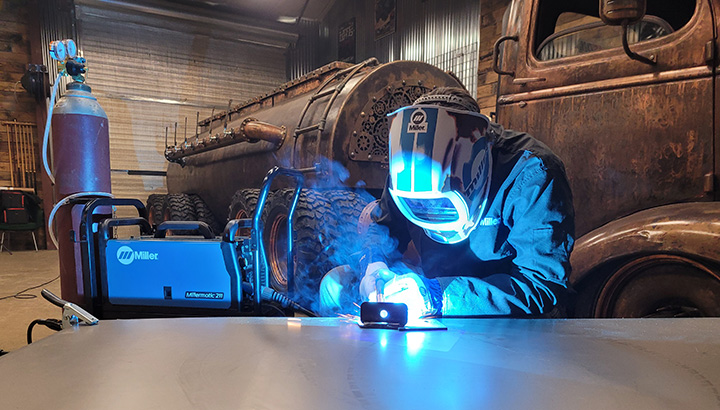
Future trends include the development of more efficient gas mixtures that reduce consumption while improving weld performance. Manufacturers are exploring environmentally friendly alternatives to traditional gases. Digital gas regulators and smart flow-control systems are becoming popular for maximizing precision. Advanced multi-gas welders will allow seamless switching between gases for different metals. Helium alternatives are being researched due to cost and supply concerns. As technology evolves, shielding gas systems will become smarter, more efficient, and more sustainable.
Conclusion
Wire welder gas is an essential part of achieving strong, clean, and professional-quality welds across a wide range of materials. From choosing the right type of gas to setting proper flow rates, understanding shielding gas plays a major role in welding success. Different gases offer unique advantages depending on the metal, thickness, and environment.
Safe handling, proper maintenance, and efficient gas usage help welders reduce costs and enhance productivity. Whether you’re a beginner or a professional fabricator, mastering wire welder gas ensures better weld quality, greater consistency, and improved long-term performance in all welding applications.
FAQs
1. What gas is best for MIG welding beginners?
C25 (75% Argon, 25% CO₂) is best because it offers a stable arc, low spatter, and easy puddle control.
2. Can you MIG weld without gas?
Yes, but only with flux-core wire that creates its own shielding during the weld.
3. Why does my weld have porosity?
Common causes include low gas flow, leaks, wind interference, or contaminated nozzles.
4. Is Argon good for welding steel?
Pure Argon is not ideal for mild steel because it causes poor penetration. Use a mix like 75/25.
5. How long does a welding gas cylinder last?
A 125 cu-ft cylinder typically lasts 5–6 hours of continuous welding at 20 CFH.
Keep an eye for more latest news & updates on premiumtechy!