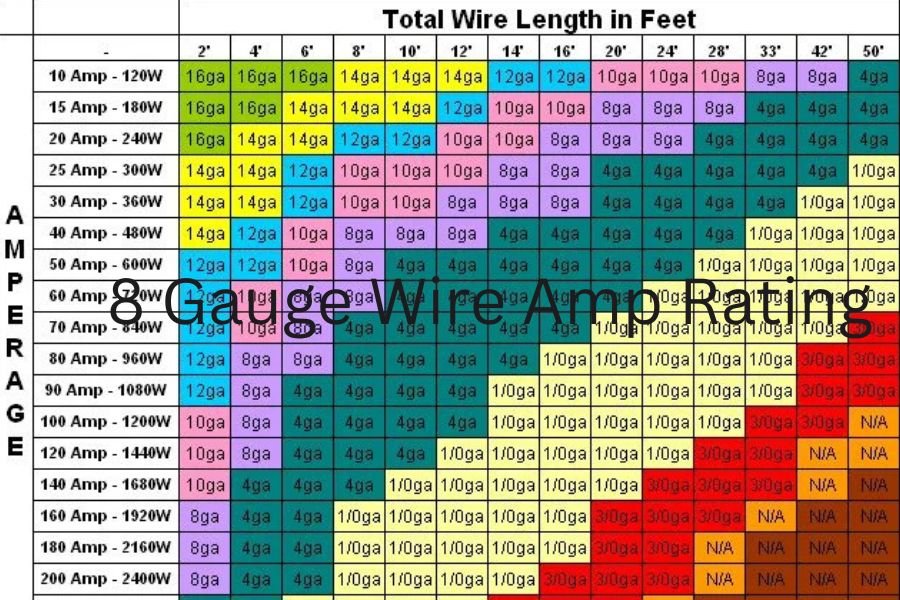
The amp rating, or ampacity, of an 8 gauge wire refers to the maximum current it can safely carry without overheating. Ampacity depends on multiple factors including the wire material, insulation type, installation method, and ambient temperature. This rating ensures the wire can handle electrical loads efficiently while maintaining safety. Exceeding the ampacity risks insulation damage, fire hazards, and reduced equipment lifespan. Understanding ampacity is critical for residential, commercial, and industrial electrical systems. The National Electrical Code (NEC) provides guidelines for determining ampacity for various scenarios. Proper wire selection ensures electrical systems operate reliably and safely.
8 gauge (8 AWG) wire is a versatile conductor commonly used for medium to high electrical loads in residential, commercial, and industrial systems. Its amp rating typically ranges from 40 to 55 amps for copper and 30 to 45 amps for aluminum, depending on insulation type, temperature rating, and installation method. Following NEC guidelines, accounting for conduit fill and voltage drop, and using proper installation practices ensures safe, efficient, and long-lasting electrical performance.
In this article, we discuss the topic of “8 gauge wire amp rating“.
How Many Amps Can 8 AWG Copper Wire Handle?

For copper wires, 8 AWG is a common size for medium-load applications. Copper 8 AWG wires rated for 90°C, such as THHN or THWN-2, can handle up to 55 amps in free air. For wires rated only to 70°C, such as THHW or RHW, the ampacity drops to around 50 amps. TW or UF insulated copper wires rated to 60°C are limited to approximately 40 amps. When installed in a conduit, heat buildup reduces ampacity further, with THHN/THWN-2 typically rated around 40 amps. Copper’s excellent conductivity makes it preferable in high-load or critical applications. Accurate calculation ensures the wiring can sustain loads without overheating or voltage drop issues.
How Many Amps Can 8 AWG Aluminum Wire Handle?
Aluminum has lower electrical conductivity compared to copper, which reduces its ampacity. An 8 AWG aluminum wire with THHN/THWN-2 insulation can safely carry up to 45 amps in free air. RHW, THHW, and XHHW aluminum wires are rated at 40 amps, while TW and UF types handle 30 amps. In conduit installations, ampacity decreases further: THHN or XHHW aluminum wires carry 30–35 amps, and UF aluminum wires handle 25–30 amps. Despite lower conductivity, aluminum is lighter and cost-effective for longer runs or larger projects. Proper connections are essential to prevent oxidation and maintain safe performance.
Understanding the NEC Guidelines for 8 Gauge Wire
The National Electrical Code sets ampacity guidelines to ensure safety and efficiency. NEC tables consider wire material, insulation, temperature rating, and installation method. These guidelines prevent overheating and fire hazards. For instance, NEC Table 310.15(B)(16) specifies ampacity for copper and aluminum conductors in various conditions. Adjustments are needed for bundled wires or high ambient temperatures. Compliance with NEC ensures systems meet legal safety standards. Following these rules avoids costly mistakes and maximizes longevity. Electrical engineers and electricians rely on NEC tables for accurate wire sizing.
Difference Between Copper and Aluminum Ampacity
Copper is more conductive than aluminum, giving it higher ampacity for the same gauge. For example, 8 AWG copper THHN wire carries 55 amps, while aluminum carries only 45 amps. Aluminum’s lower ampacity requires larger gauges to achieve the same current-carrying capacity. Copper wires are preferred for shorter runs or high-demand appliances due to reliability and reduced voltage drop. Aluminum is lighter, cheaper, and better suited for longer runs or service entrance feeders. Installation techniques differ; aluminum needs special connectors to mitigate thermal expansion. Understanding these differences is key for safe, cost-effective wiring.
Ampacity of 8 Gauge Wire at Different Temperature Ratings
Temperature ratings of insulation directly affect 8 AWG wire ampacity. Wires rated for 90°C, like THHN/THWN-2, can carry the highest current. 70°C rated wires, such as THHW or RHW, handle slightly less. TW or UF wires, rated to 60°C, have the lowest ampacity. Ambient temperature also plays a role; hotter environments reduce current capacity. NEC provides correction factors for different temperatures. Choosing the correct insulation ensures safe operation under expected conditions. Proper understanding prevents overheating and prolongs wire lifespan.
8 Gauge Wire Amp Rating for THHN and THWN-2 Cables
THHN and THWN-2 are versatile copper wire types rated for up to 90°C. In free air, 8 AWG copper THHN/THWN-2 can carry 55 amps. Installed in conduit, the ampacity drops to around 40 amps due to heat buildup. These cables are suitable for wet and dry locations, industrial environments, and high-load appliances. Aluminum versions of THHN/THWN-2 have lower ampacity, typically 45 amps in free air. These cables are popular for feeders, branch circuits, and equipment connections. Their dual rating makes them suitable for diverse installation conditions. Proper installation ensures long-term reliability.
8 AWG Wire for Air Conditioning Units
8 AWG wire is commonly used for central air conditioning units due to their high current draw. These units require stable and reliable wiring to ensure efficient performance. Using the correct amp-rated wire prevents overheating, voltage drop, and potential damage to the compressor. Copper 8 AWG wire is preferred for high-efficiency systems, though aluminum may be used for cost-sensitive projects. Proper insulation type, like THHN or THWN-2, ensures durability in both indoor and outdoor environments. Long wire runs should consider voltage drop calculations to maintain system efficiency. Always follow NEC guidelines to ensure safe installation.
8 Gauge Wire for Water Heaters
Electric water heaters, especially tankless and high-capacity models, often require 8 AWG wire for their circuits. This wire provides sufficient ampacity to handle continuous power demands without overheating. Using THHN/THWN copper wire ensures maximum efficiency and compliance with NEC standards. Aluminum wire can be used but requires careful termination to avoid oxidation and resistance issues. Proper conduit installation protects the wire from mechanical damage and moisture exposure. For long runs, consider voltage drop adjustments to maintain water heater performance. Safety switches and breakers should match the amp rating of the wire.
8 Gauge Wire for Large Motors and Pumps
Large motors and industrial pumps demand high current, making 8 AWG wire suitable for many medium-duty applications. Ampacity depends on the type of conductor and insulation used, with copper providing higher current capacity than aluminum. Proper wire sizing prevents overheating during startup surges, which can exceed normal operating current. Installing wires in conduit helps protect them from physical damage and improves safety. Voltage drop calculations are critical for motor efficiency and longevity. Following NEC guidelines ensures compliance and reduces the risk of electrical failures. Regular inspections prevent degradation from vibration and environmental conditions.
Using 8 AWG Wire for Ovens and Ranges
Some household ovens, especially in apartments or smaller kitchens, can operate efficiently with 8 AWG wire. This wire supports the high-current requirements without risking overheating or voltage drop. Copper THHN/THWN-2 wire is ideal for long-term reliability and safety. Aluminum wiring can be used if properly terminated with anti-oxidant compounds. Conduit installation protects the wire from accidental damage in kitchen environments. Always match the wire ampacity with the breaker size to prevent electrical hazards. Consider the distance of the wire run to maintain voltage levels and appliance performance.
8 Gauge Wire for Hot Tubs and Spas
Hot tubs and spas require circuits capable of handling multiple heaters and pumps simultaneously. 8 AWG wire ensures safe power delivery while preventing overheating in wet environments. THWN-2 insulated copper wire is commonly used due to its water resistance and thermal performance. Aluminum wiring is feasible with proper connectors and terminations to reduce oxidation risks. Conduit installation and proper grounding are essential for safety. Wire runs should account for voltage drop to maintain motor and heater efficiency. Regular inspection ensures the integrity of connections in high-moisture areas.
Service Entrance Applications for 8 AWG Wire
8 AWG wire can be used for service entrances in smaller homes or structures with minimal power demand. Copper wire provides higher ampacity, supporting up to 55 amps depending on insulation and temperature rating. Aluminum wire is a lighter and more economical alternative, but care must be taken for proper connections. Conduit installation protects the wire from environmental hazards, including sunlight, moisture, and physical damage. NEC-compliant breakers and grounding systems must be used to ensure safety. Voltage drop considerations are crucial for longer runs. This wire is often used to feed subpanels in smaller properties.
Agricultural and Irrigation Applications for 8 Gauge Wire
8 AWG wire is widely used in agricultural and irrigation systems to supply power to pumps, lighting, and outbuildings. Copper wire is preferred for continuous heavy loads, though aluminum may be used for cost efficiency. Proper conduit installation protects the wiring from moisture, UV exposure, and mechanical damage. Ampacity ratings must consider outdoor temperature fluctuations and environmental factors. Voltage drop calculations ensure that pumps and irrigation systems run efficiently over long distances. Regular inspections prevent corrosion and ensure continuous operation. NEC compliance is essential for safety and longevity.
Renewable Energy Uses: Solar and Wind Installations
In solar and wind installations, 8 AWG wire is used for short-distance connections between panels, inverters, and distribution boards. Copper wire provides lower resistance and higher efficiency, while aluminum may be used for cost savings. Insulation type must be weather-resistant and rated for UV exposure. Proper ampacity ensures that energy generated by renewable systems is transmitted safely without overheating or energy loss. Voltage drop calculations are critical for maintaining system efficiency. Grounding and bonding of these circuits enhance safety. Conduit protection is recommended to prevent damage from environmental exposure.
Grounding Applications with 8 AWG Wire
8 AWG wire is suitable for grounding and bonding in residential, commercial, and industrial installations. Copper is preferred for grounding due to its superior conductivity, while aluminum is less common. Proper grounding ensures safety by directing fault currents safely to the earth. Connections must comply with NEC standards to avoid potential fire or shock hazards. The wire’s insulation and conduit protection are critical when exposed to moisture or mechanical damage. Adequate ampacity ensures it can handle fault currents without melting. Regular inspection and maintenance are important for reliable grounding performance.
Portable Power and Extension Cord Applications

8 AWG wire is often used in heavy-duty extension cords and portable power drops for industrial and construction sites. Stranded copper wire is preferred for flexibility and durability. Ampacity must match the load to avoid overheating during prolonged use. Aluminum may be used but requires proper termination to prevent oxidation and voltage drop. Conduit or protective sheathing enhances safety in outdoor or high-traffic environments. Voltage drop calculations are necessary to maintain performance for high-power equipment. Properly rated breakers and connectors reduce the risk of fire and ensure reliability.
Stranded vs. Solid 8 Gauge Wire Amp Ratings
Stranded 8 AWG wire consists of multiple thin strands and offers greater flexibility for routing in tight spaces. Solid wire provides slightly higher ampacity due to its uniform cross-section and is often used for fixed installations. Both types must follow NEC ampacity guidelines based on insulation, temperature, and installation method. Stranded wire is ideal for portable equipment and flexible connections. Solid wire is better for permanent installations, such as branch circuits or subpanels. Proper termination techniques differ for stranded and solid wire. Selecting the correct type ensures both safety and efficient current flow.
Ampacity of 8/2 and 8/3 NM-B Romex Wire
8/2 and 8/3 NM-B (Romex) wires are commonly used for residential circuits, including outlets, lights, and small appliances. The 8/2 wire has two conductors, while 8/3 includes three conductors, allowing for multi-way switching or split-phase loads. Ampacity for these wires typically ranges from 40–50 amps depending on copper or aluminum conductors. Proper installation within walls or ceilings requires compliance with NEC spacing and protection rules. Voltage drop should be calculated for long runs to maintain appliance efficiency. Copper is preferred for higher reliability, but aluminum is sometimes used in budget-sensitive projects.
Ampacity of UF-B Underground Feeder 8 Gauge Wire
UF-B (Underground Feeder) 8 AWG wire is designed for direct burial without conduit. Copper UF-B wire can handle 40 amps, while aluminum is rated for 30 amps. Insulation is resistant to moisture, sunlight, and soil chemicals. Conduit may still be used for extra protection or where physical damage is possible. Ampacity may be derated for long runs or high-temperature soil conditions. Proper burial depth ensures safety and compliance with NEC codes. Voltage drop considerations are important for maintaining appliance or pump performance.
8/3 Aluminum MC Cable Ampacity
8/3 Aluminum MC (Metal-Clad) cable combines aluminum conductors with protective metal sheathing. Ampacity ranges from 40–55 amps depending on temperature and installation conditions. MC cable is often used in commercial or industrial settings where physical protection is required. Proper connectors and terminations are essential to prevent oxidation and maintain conductivity. Voltage drop must be considered for longer cable runs. Copper is preferred for higher ampacity, but aluminum provides a lighter and more economical solution. NEC guidelines dictate spacing, grounding, and installation practices for MC cables.
SER Cable Amp Rating and Applications
SER (Service Entrance) cables carry power from the main utility connection to residential or commercial panels. 8 AWG SER cables typically handle up to 45 amps, depending on conductor and insulation type. These cables include multiple conductors for neutral, hot, and ground connections. Proper installation prevents overheating, ensures grounding compliance, and maintains system safety. Copper conductors provide higher ampacity and durability compared to aluminum. Conduit protection may be required depending on environmental exposure. Voltage drop and distance should be considered for efficient energy delivery.
How Conduit Fill Affects 8 Gauge Wire Ampacity
The number of wires in a conduit directly impacts the ampacity of 8 AWG wire. More conductors increase heat buildup, requiring derating to prevent overheating. NEC provides tables to calculate ampacity adjustments for multiple wires. Proper spacing and conduit size help maintain wire temperature and efficiency. Insulation type and ambient temperature must also be considered. Overcrowded conduits can reduce wire lifespan and increase safety risks. Engineers must balance conduit fill with installation practicality to ensure compliance.
Adjusting Ampacity for Multiple Conductors in a Conduit
When multiple 8 AWG conductors share a conduit, ampacity must be adjusted according to NEC derating factors. Heat accumulation from neighboring wires reduces the safe current-carrying capacity. The type of insulation and ambient temperature influences the degree of derating. Calculations prevent overheating, insulation damage, and fire hazards. Proper conduit sizing and spacing are essential to maintain airflow and heat dissipation. Using larger wire gauges or additional conduits may be necessary for high-load installations. Accurate adjustments ensure safety and system efficiency.
Safety Tips for Installing 8 Gauge Wire
Safety is critical when installing 8 AWG wire. Always turn off power at the breaker before starting. Use proper wire type, insulation, and ampacity for your application. Protect wires in conduit or behind walls to prevent mechanical damage. Ensure terminations are tight, clean, and corrosion-resistant. Follow NEC codes for grounding, spacing, and breaker sizing. Wear protective gear, including gloves and eye protection. Regular inspection after installation ensures continued safety and performance.
Common Mistakes When Using 8 AWG Wire

Typical mistakes include using the wrong conductor material, improper insulation type, and exceeding ampacity ratings. Installing wires in overcrowded conduits without derating can lead to overheating. Voltage drop is often ignored in long runs, affecting equipment performance. Incorrect termination of aluminum wires can cause oxidation and resistance. Failing to follow NEC guidelines for grounding and breaker sizing can create fire hazards. Using wire for applications beyond its rated capacity compromises safety. Regular training and code familiarity prevent these errors.
Tools Needed to Safely Install 8 Gauge Wire
Installing 8 AWG wire requires essential tools like wire strippers, conduit benders, fish tape, and cable cutters. Voltage testers and multimeters ensure circuits are de-energized before work. Torque wrenches help secure terminals to proper specifications. Protective gloves and eye gear prevent injuries from sharp wires or insulation. Conduit knockout punches assist in routing wires through panels safely. Labeling tools help identify circuits for future maintenance. Using the right tools ensures efficiency, safety, and compliance with electrical standards.
Conclusion
8 AWG wire is a versatile conductor widely used in residential, commercial, and industrial applications. Understanding its ampacity, whether for copper or aluminum, is crucial to ensure safety and optimal performance. The wire’s capacity is influenced by factors like insulation type, temperature rating, conduit fill, and installation environment. Proper planning, including voltage drop calculations and NEC-compliant installation practices, prevents overheating, equipment damage, and fire hazards. Choosing the right type of 8 AWG wire for specific applications—ranging from air conditioners and water heaters to renewable energy systems—ensures reliability and longevity. Following safety tips, using proper tools, and adhering to electrical codes are essential for both DIY enthusiasts and professional electricians. Ultimately, knowledge of amp ratings and correct installation practices allows you to maximize efficiency while minimizing risks.
FAQs
1. How many amps can 8 AWG copper wire handle?
8 AWG copper wire typically handles 40–55 amps depending on insulation type, temperature rating, and installation conditions. For most residential applications, 50 amps is considered standard with THHN or THWN-2 insulation.
2. Can 8 AWG aluminum wire replace copper?
Yes, aluminum 8 AWG wire can replace copper in some applications, but its ampacity is lower (usually 30–40 amps). Proper connectors, anti-oxidant compounds, and careful terminations are required to ensure safety.
3. Is 8 AWG wire suitable for long runs?
Yes, but voltage drop must be considered. For long wire runs, the ampacity may need derating, or a larger wire size may be required to maintain safe and efficient operation.
4. Can 8 AWG wire be used for air conditioners?
Yes, many central AC units and smaller systems can safely use 8 AWG copper wire. Always check the manufacturer’s specifications and NEC ampacity guidelines to ensure the correct size.
5. What insulation types are best for 8 AWG wire?
THHN, THWN-2, XHHW-2, and UF-B are common insulation types for 8 AWG wire. Choice depends on whether the wire is used indoors, outdoors, underground, or in wet locations.
6. How does conduit fill affect ampacity?
More wires in a conduit generate heat, which reduces the safe ampacity of each conductor. NEC derating tables should be applied to prevent overheating.
7. Can 8 AWG wire be used for subpanel feeds?
Yes, 8 AWG wire can feed small subpanels, typically up to 50 amps, depending on copper or aluminum conductors and local electrical codes.
8. What is the difference between stranded and solid 8 AWG wire?
Stranded wire is flexible, making it ideal for portable equipment and tight bends. Solid wire has slightly higher ampacity and is used for permanent, fixed installations.
9. How do environmental factors affect 8 AWG ampacity?
High temperatures, direct sunlight, wet locations, or underground installation can reduce ampacity. Proper insulation, derating, and conduit protection mitigate these effects.
10. What safety precautions should I take when installing 8 AWG wire?
Always turn off power before installation, use proper tools, follow NEC codes, ensure correct ampacity, protect wires in conduit, use proper grounding, and inspect connections for tightness and corrosion.
Keep an eye for more latest news & updates on premiumtechy!