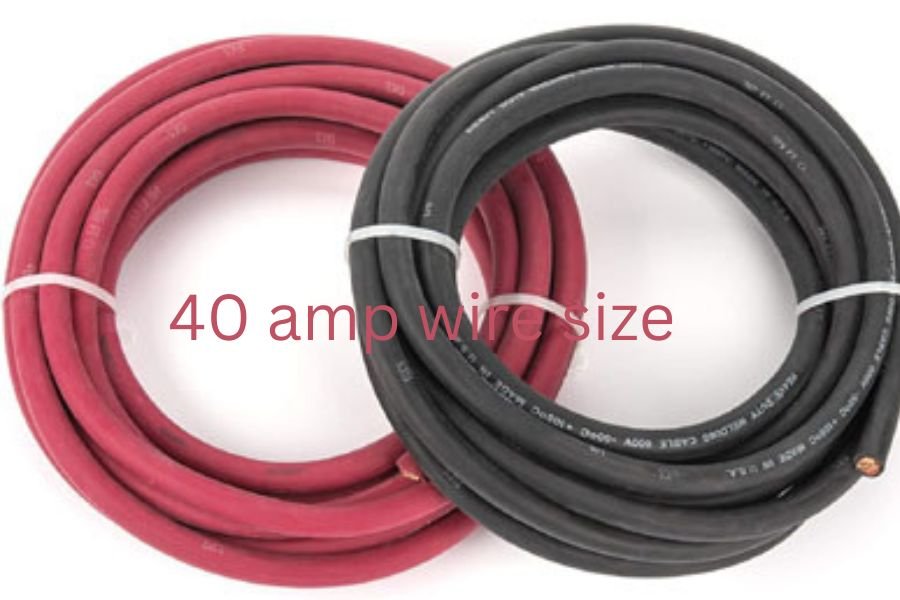
Wire sizing is the foundation of electrical safety and performance. The size of a wire determines how much current (amps) it can safely carry without overheating. If the wire is too small for the amperage, it can cause excessive heat, damage insulation, or even start a fire. Electricians use standardized systems like the American Wire Gauge (AWG) to identify wire thickness. The lower the AWG number, the thicker the wire and the higher its current-carrying capacity. Understanding how wire size relates to amperage helps prevent energy loss, overheating, and costly mistakes in installations.
For a 40-amp circuit, the correct wire size is typically 8 AWG copper or 6 AWG aluminum for standard runs under 100 feet. Using the proper wire gauge prevents overheating, reduces voltage drop, and ensures compliance with electrical safety codes. For longer distances or higher temperatures, choosing a larger wire size improves efficiency and overall circuit safety.
In this article, we discuss the topic of “40 amp wire size“.
What Does “40 Amp Wire Size” Mean?
When we say “40 amp wire size,” we’re referring to the correct thickness of electrical wire that can handle a continuous load of 40 amperes safely. This wire size is often used in high-power appliances such as electric ovens, hot tubs, or EV chargers. The wire must be thick enough to handle the load without exceeding its temperature limit. Choosing the wrong wire size can cause voltage drops or overheating. For most installations, a 40-amp circuit typically requires an 8 AWG copper wire or 6 AWG aluminum wire, depending on distance and installation type.
Why Choosing the Right Wire Size Matters for a 40 Amp Circuit

Selecting the correct wire size ensures both safety and efficiency. If the wire is too small, it may overheat and create a fire hazard. If it’s too large, you’ll spend more money than necessary. Proper wire sizing minimizes energy loss, maintains voltage stability, and keeps your system compliant with the National Electrical Code (NEC). Using the correct wire gauge for 40 amps also ensures your equipment runs smoothly, extending its lifespan and preventing electrical malfunctions. Always match wire size with breaker rating and expected load conditions.
The Relationship Between Amperage, Voltage, and Wire Gauge
Amperage, voltage, and wire gauge are interconnected. Amperage (current) is the flow of electricity, voltage is the force that pushes it, and wire gauge is the size of the conductor carrying it. A thicker wire (lower AWG number) can carry more amps at a specific voltage without overheating. For example, an 8 AWG copper wire is generally rated for up to 40 amps at 240 volts. However, voltage drop increases with distance, meaning you may need a thicker wire for longer runs. Balancing these three factors ensures efficient and safe electrical operation.
What Is AWG (American Wire Gauge) and How It Works
The American Wire Gauge (AWG) system is the standard measurement used in North America to define wire thickness. The AWG number decreases as the wire’s diameter increases. For example, 10 AWG is thinner than 8 AWG. Each step in AWG represents about a 26% increase or decrease in cross-sectional area. Wire resistance also decreases with thicker wires, allowing them to carry higher currents. Understanding AWG helps electricians select the correct wire size for specific amperage ratings, ensuring the circuit remains efficient and compliant with electrical standards.
40 Amp Wire Size Chart (Copper vs. Aluminum)
| Material | Wire Gauge (AWG) | Maximum Amperage | Typical Voltage |
| Copper | 8 AWG | 40 Amps | 120V / 240V |
| Aluminum | 6 AWG | 40 Amps | 120V / 240V |
Copper wires conduct electricity more efficiently than aluminum, allowing a smaller size for the same amperage. Aluminum, while cheaper and lighter, requires a thicker wire to carry the same current. Always consult the NEC chart or manufacturer specifications before installation to ensure safe operation. For 40 amps, 8 AWG copper or 6 AWG aluminum are the most reliable choices.
NEC Guidelines for 40 Amp Wire Sizing
The National Electrical Code (NEC) sets the standards for safe electrical installation across the U.S. According to NEC Table 310.16, a wire used for a 40-amp circuit must have sufficient ampacity to handle the load continuously. The code also considers insulation type, ambient temperature, and conductor material. NEC recommends 8 AWG copper wire with 75°C insulation for a 40-amp circuit. For aluminum conductors, 6 AWG is typically required. Always verify the latest NEC version in your region, as requirements can vary by state or local code.
Recommended 40 Amp Wire Size for Copper Wires
For most residential and commercial applications, 8 AWG copper wire is ideal for a 40-amp circuit. Copper provides superior conductivity and durability, making it the preferred choice for high-power circuits. It also offers less voltage drop over long distances compared to aluminum. However, if your run exceeds 100 feet, you may need to upgrade to a 6 AWG copper wire to compensate for voltage loss. Copper is slightly more expensive but provides long-term safety, stability, and better performance under load.
Recommended 40 Amp Wire Size for Aluminum Wires
If you prefer aluminum wire due to cost or availability, the correct size for a 40-amp circuit is 6 AWG aluminum. Aluminum is lighter and more affordable but has higher electrical resistance than copper, meaning it needs a larger diameter to carry the same current. Always use anti-oxidant compound and proper connectors rated for aluminum wiring to prevent corrosion and ensure a secure connection. Aluminum wiring is commonly used in feeders and larger branch circuits when budget and distance are factors.
Comparing Copper vs. Aluminum for 40 Amp Circuits
Choosing between copper and aluminum depends on your priorities. Copper wires are more efficient, durable, and heat-resistant, making them ideal for indoor circuits. Aluminum wires, on the other hand, are lighter and cheaper, suitable for long-distance or outdoor runs. Copper is less prone to oxidation, while aluminum requires special anti-corrosive treatment. Although aluminum can save costs on large installations, copper remains the safer and more reliable option for most homeowners and electricians dealing with 40-amp circuits.
How Distance Affects 40 Amp Wire Size
Distance plays a major role in wire selection. As the length of the wire increases, voltage drop becomes significant, reducing efficiency and potentially damaging connected devices. For a short run under 50 feet, 8 AWG copper is sufficient. Between 100 to 150 feet, upgrade to 6 AWG copper to maintain voltage levels. If using aluminum, consider 4 AWG for longer distances. Always calculate voltage drop (ideally under 3%) to ensure that your circuit performs safely and efficiently over the entire wire run.
Wire Size for 40 Amp Circuits Over 100 Feet
When your circuit exceeds 100 feet, voltage drop becomes a serious concern. For a 40-amp circuit, 6 AWG copper wire is recommended for runs up to 150 feet, while 4 AWG aluminum wire should be used for similar lengths. Beyond 150 feet, you may need to go even thicker to maintain voltage stability. The general rule of thumb is to increase wire gauge by one size for every 100 feet. Keeping voltage drop below 3% ensures your equipment receives consistent power and operates safely.
Wire Size for 40 Amp Circuits Over 200 Feet
For extremely long runs of over 200 feet, wire resistance increases significantly. In this case, use 4 AWG copper or 2 AWG aluminum wire to maintain efficiency. A voltage drop of more than 3% can lead to motor inefficiency, dim lighting, or even tripped breakers. Though thicker wires cost more, they are essential for long-distance installations. Always perform a voltage drop calculation or use an online calculator to confirm your wire size before installation.
Calculating Voltage Drop for Long 40 Amp Runs
Voltage drop occurs when current travels through a conductor and loses energy as heat. To calculate voltage drop, use the formula:
Voltage Drop (V) = Current (I) × Resistance (R) × Distance (D).
For a 40-amp circuit, a voltage drop exceeding 3% can cause issues. Using a larger gauge wire reduces resistance and maintains efficiency. For example, if a 100-foot run with 8 AWG wire causes a 3.5% drop, switching to 6 AWG can bring it under 3%. Proper calculations protect both your wiring and your equipment from performance loss.
Temperature Rating and Its Impact on Wire Ampacity
Wire insulation temperature rating directly affects ampacity. Most residential wires are rated for 60°C, 75°C, or 90°C. The higher the rating, the more current the wire can safely carry. For a 40-amp circuit, if you’re using wire rated at 75°C, 8 AWG copper is adequate. However, in hotter environments or conduits with multiple wires, you may need to derate capacity or increase wire size. Always match wire insulation rating to the application to maintain code compliance and prevent overheating.
Indoor vs. Outdoor Wire Types for 40 Amp Breakers
When selecting a wire for a 40-amp circuit, it’s important to consider the environment. Indoor wiring typically uses NM-B (non-metallic sheathed cable), which is suitable for dry, protected spaces like walls and attics. For outdoor installations, use UF-B (underground feeder) or THWN/THHN wires that can handle moisture and direct sunlight. Outdoor wires require additional protection using PVC conduit to prevent mechanical damage. The goal is to ensure that the insulation type matches the environment to prevent corrosion, shorts, and performance issues over time.
Common Wire Types Used in 40 Amp Circuits (NM-B, UF-B, MC, THWN)
Several wire types can handle 40 amps depending on installation conditions. NM-B is a common choice for indoor residential wiring where moisture isn’t a concern. UF-B is rated for underground or outdoor applications, providing excellent moisture resistance. MC cable (metal-clad) is ideal for commercial buildings where additional protection is needed. THWN or THHN single conductors are used in conduit systems for both indoor and outdoor runs. Each type has unique insulation properties, so always choose one rated for the environment and amperage.
Understanding Cable Markings and Labels for 40 Amp Wiring
Wire jackets are printed with important information, including size (AWG), type (e.g., NM-B, THHN), temperature rating, and voltage rating. For example, “8 AWG THHN 600V 75°C” means the wire can handle 40 amps at 600 volts with insulation rated for 75°C. Always verify these markings before installation. They ensure that the wire meets NEC standards for your circuit’s amperage and conditions. Using unmarked or mislabeled wires can lead to code violations and safety risks during inspection or operation.
The 25% Rule for Wire Sizing and Circuit Load
According to NEC guidelines, continuous loads (those running for more than three hours) must not exceed 80% of the circuit breaker’s capacity. This means for a 40-amp breaker, the continuous load should be a maximum of 32 amps. To apply the 25% rule, multiply the load current by 1.25 when selecting a wire. For instance, a continuous 32-amp load × 1.25 = 40 amps, meaning you should use wire rated for 40 amps or higher. This rule ensures your wiring system remains cool and reliable under long-term operation.
How to Calculate the Right Wire Size for Your 40 Amp Circuit
To find the correct wire size, you’ll need to consider several factors — amperage, voltage, length, material, and temperature. Start with your circuit amperage (40 amps). Choose your conductor material (copper or aluminum). Determine the total wire run distance and adjust for voltage drop if it exceeds 3%. Then, select the corresponding AWG size from an ampacity chart that matches your temperature rating. This ensures your wire can handle the load safely while maintaining efficiency and compliance with NEC standards.
What Happens If You Use the Wrong Wire Size
Using the wrong wire size can create serious problems. An undersized wire overheats, melts insulation, and may even start a fire. It also causes voltage drops, leading to inefficient appliance performance. An oversized wire isn’t dangerous, but it costs more and can make installation more difficult due to stiffness. Incorrect wire sizing can also cause breaker trips and damage sensitive electronics. To avoid these issues, always match wire gauge to the circuit’s amperage rating and follow NEC code recommendations.
Dangers of Using an Undersized Wire for a 40 Amp Breaker
Undersized wires are one of the leading causes of electrical fires. When a 40-amp breaker feeds a wire that can only handle 30 amps, the conductor overheats every time current flows through it. The insulation can melt, leading to shorts or even arcing inside the wall. This risk increases in circuits with continuous or high-demand loads like ovens and water heaters. Always ensure the wire is rated equal to or above the breaker’s amperage to protect both your home and your electrical devices.
Is It Safe to Use a Larger Wire Than Required?
Yes — using a larger wire than required (for example, 6 AWG copper instead of 8 AWG for 40 amps) is completely safe and often beneficial. Larger wires reduce resistance and voltage drop, improving circuit efficiency. The only downsides are cost and flexibility; thicker wires are more expensive and harder to route through conduits. However, if your run is long or if efficiency is a priority, using a larger wire can actually enhance system performance and safety without any electrical drawbacks.
How to Check Wire Size Compatibility with a 40 Amp Breaker
Before connecting your wire, ensure that its ampacity rating equals or exceeds your breaker’s rating. You can check this by referring to NEC Table 310.16 or the wire manufacturer’s specifications. Also, inspect the breaker terminal rating — most 40-amp breakers accept 8 AWG copper or 6 AWG aluminum. Make sure the conductor insulation matches the breaker’s temperature rating (usually 75°C). Finally, double-check local code requirements, as some areas may have additional rules for conductor sizing or insulation type.
Choosing Between Solid and Stranded Wires for 40 Amps
Both solid and stranded wires have their uses. Solid wires are a single piece of metal — stiffer but easier to connect under terminals, making them ideal for permanent indoor wiring. Stranded wires consist of multiple small strands twisted together, offering flexibility and resistance to vibration, which is ideal for outdoor or mobile applications. For 40 amps, either type can work as long as it meets AWG and insulation ratings. Stranded wire is recommended for longer or more complex routing.
40 Amp Wire Size for 120V Circuits
For 120-volt systems carrying 40 amps, use 8 AWG copper wire or 6 AWG aluminum. However, note that 120V circuits at 40 amps are rare in residential applications, as most heavy-duty loads run on 240V. If you must run a 120V/40A line (for example, in specialized equipment or shop tools), ensure the total load doesn’t exceed 80% of the breaker capacity. Keep voltage drop below 3% by increasing wire size if your run exceeds 100 feet.
40 Amp Wire Size for 240V Circuits
Most 40-amp circuits operate on 240 volts, commonly used for stoves, water heaters, and EV chargers. For typical residential runs under 100 feet, 8 AWG copper or 6 AWG aluminum is the standard. The higher voltage reduces current loss and voltage drop compared to 120V, making the circuit more efficient. For long runs (over 150 feet), increase to 6 AWG copper or 4 AWG aluminum to maintain voltage stability. Always ensure both hot wires in the circuit are properly sized and insulated for 240V use.
40 Amp Wire Size for Three-Phase Circuits
Three-phase systems are often used in commercial or industrial settings. They distribute power more efficiently than single-phase systems. For a 40-amp three-phase circuit, 8 AWG copper or 6 AWG aluminum wires are typically suitable for short runs. However, because three-phase systems reduce current per phase, the voltage drop is lower, allowing slightly longer runs before needing thicker wire. Always verify ampacity and insulation ratings for your specific voltage (208V, 240V, or 480V) and application environment.
Wire Size for 40 Amp Breakers in RVs or Campers
RVs and campers often use 40-amp service connections for appliances or air conditioning. For portable cords or extension leads, 8 AWG copper wire is the preferred choice due to flexibility and strength. Aluminum isn’t recommended for mobile setups because of vibration risks and corrosion. Ensure your RV plug, receptacle, and breaker all match the 40-amp rating. Using a heavier 6 AWG wire for longer cords can help prevent voltage drop and improve power delivery to your RV systems.
Wire Size for 40 Amp EV Chargers (Level 2 Charging Stations)
EV chargers are one of the most common uses for 40-amp circuits. A Level 2 charger typically draws 32 amps continuously, which fits perfectly under an NEC-rated 40-amp breaker (80% load). For most home installations, 8 AWG copper wire is ideal up to 100 feet. For longer runs, 6 AWG copper or 4 AWG aluminum is recommended. Always use THHN/THWN wire in conduit for EV charger installations and ensure your circuit is protected by a GFCI breaker where required.
Wire Size for 40 Amp Hot Tub or Spa Installations
Hot tubs and spas are heavy electrical loads that often require a 40-amp circuit to power pumps, heaters, and control systems. The most common and safest choice for this setup is 8 AWG copper wire rated for wet or outdoor use, such as THWN or UF-B. If the distance exceeds 100 feet, move up to 6 AWG copper to minimize voltage drop. Always install the hot tub on a dedicated GFCI-protected circuit, and follow manufacturer specifications for wire type, breaker rating, and conduit protection.
Wire Size for 40 Amp Electric Ranges and Cooktops
Most electric ranges, ovens, and cooktops operate on 240 volts and draw around 40 amps. In this case, 8 AWG copper is ideal for runs up to 100 feet. For longer runs, increase to 6 AWG. Copper wiring provides stable current delivery to heating elements, ensuring even cooking and preventing tripped breakers. Always use high-heat rated insulation such as THHN/THWN, and confirm that both your appliance and wall outlet are rated for 40 amps and 240 volts before installation.
Wire Size for 40 Amp Water Heaters
A typical large electric water heater requires a 40-amp, 240-volt circuit. For this load, 8 AWG copper wire or 6 AWG aluminum wire is recommended. The wire should be installed in conduit or protected sheathing, depending on the location. If the heater is located far from the main panel (over 100 feet), use a larger gauge to maintain voltage efficiency. Also, check your local electrical code — some areas require a dedicated disconnect switch near the water heater for safety.
Wire Size for 40 Amp Air Conditioners or Heat Pumps

Air conditioners and heat pumps have high starting currents and often operate on 40-amp circuits. The recommended wire size is 8 AWG copper for most installations. For runs longer than 100 feet or in high-temperature environments, increase to 6 AWG to prevent voltage drop. Outdoor condenser units must use weather-rated wire types like THWN or UF-B inside conduit. Always match the wire and breaker size to the equipment’s nameplate rating to ensure full compliance and performance.
Using Conduits with 40 Amp Wires — What to Know
Conduits protect your wires from mechanical damage, moisture, and UV exposure. For 40-amp circuits, PVC or metal conduit (EMT) is commonly used. When pulling multiple conductors, make sure the conduit fill does not exceed 40% of its internal space. Wires like THHN/THWN are designed for use inside conduits. Properly sized conduits not only meet code but also improve cooling by allowing air circulation. Always seal outdoor conduit ends to prevent moisture or pest intrusion.
How to Read and Use an Ampacity Chart Correctly
An ampacity chart lists the maximum current a wire can handle at specific temperature ratings and insulation types. To use it, identify your wire material (copper or aluminum), insulation temperature (60°C, 75°C, or 90°C), and installation type (in conduit, free air, etc.). Cross-reference these with your current requirement — in this case, 40 amps. For example, 8 AWG copper rated at 75°C supports 40 amps. Always use the column that matches your insulation and environment to ensure accuracy and compliance with the NEC.
AWG vs. SWG: Understanding the Difference in Wire Sizing Systems
While AWG (American Wire Gauge) is used in North America, SWG (Standard Wire Gauge) is used in the UK and some other countries. The two systems use different measurement scales, so they’re not interchangeable. For instance, 8 AWG is approximately equal to 8.4 SWG. Always confirm the system your wire manufacturer uses, especially when ordering internationally. Using the wrong standard can result in incorrect wire sizing and potential electrical hazards in 40-amp installations.
Minimum and Maximum Wire Size Limits for 40 Amp Breakers
For a 40-amp breaker, the minimum wire size is 8 AWG copper or 6 AWG aluminum. Using anything smaller is unsafe and violates NEC code. There’s technically no maximum wire size, but practicality comes into play — overly thick wires may not fit into breaker terminals. Most 40-amp breakers can accommodate wire sizes up to 6 AWG comfortably. Always check your breaker’s terminal rating and ensure the wire insulation is compatible with the terminal’s temperature rating.
How to Upgrade a Circuit to 40 Amps Safely
Upgrading to a 40-amp circuit requires more than just changing the breaker. You must ensure the wiring, outlets, and connected devices are all rated for 40 amps. Step one: turn off main power. Step two: replace the old breaker with a 40-amp unit that matches your panel brand. Step three: run the correct size wire (8 AWG copper or 6 AWG aluminum). Step four: install properly rated outlets or devices. Finally, have a licensed electrician inspect and test the system for safety.
Common Mistakes When Choosing 40 Amp Wire Size
Many DIY installers make mistakes when wiring a 40-amp circuit. The most common errors include using too small a wire, ignoring voltage drop over distance, and choosing the wrong insulation type for the environment. Some also mismatch breaker and wire ratings or forget to derate wire capacity in hot spaces or conduit bundles. Avoid these issues by double-checking ampacity charts, following NEC guidelines, and consulting a qualified electrician before making permanent connections.
Signs You’re Using the Wrong Wire for a 40 Amp Circuit
If your wire size isn’t suitable for your 40-amp breaker, you may notice flickering lights, tripping breakers, or warm outlets and cables. Overheating is the clearest warning sign of undersized wiring. Additionally, devices may run inefficiently due to voltage drop. If your breaker trips often or insulation smells burnt, disconnect the circuit immediately and have it inspected. Using a thermal scanner can help detect hot spots in wires before they cause damage or fire hazards.
Tools Needed for Measuring and Installing 40 Amp Wiring
Working on a 40-amp circuit requires the right tools for safety and precision. You’ll need a wire stripper, multimeter, voltage tester, fish tape, and conduit bender if using EMT. Torque screwdrivers are essential to ensure breaker and terminal screws are tightened to manufacturer specifications. Use anti-oxidant compound for aluminum wires and cable clamps to secure wires in junction boxes. Always wear insulated gloves and follow lockout/tagout procedures when working near live circuits.
Safety Tips When Working with 40 Amp Breakers
Electricity is dangerous, especially at higher currents like 40 amps. Always turn off the main breaker before starting work and verify power is off using a voltage tester. Avoid touching bare wires, and never use damaged cables. When working outdoors, ensure all connections are weather-sealed. Use GFCI protection where moisture is present. If you’re unsure about wire sizing or breaker compatibility, consult a licensed electrician. Following these safety steps prevents injury, fires, and costly electrical failures.
Importance of Consulting Local Electrical Codes
While the NEC provides national standards, local jurisdictions may have additional requirements for wire types, conduit use, or breaker ratings. Some areas require GFCI or AFCI protection for specific circuits, even if not mandated by the NEC. Before starting your 40-amp wiring project, check your local building department’s regulations. Using the correct materials and methods ensures your installation passes inspection and remains safe for years to come.
Should You DIY or Hire a Licensed Electrician?
Installing a 40-amp circuit involves understanding wire sizing, breaker types, grounding, and code compliance. While skilled DIYers can handle smaller projects, high-amperage circuits should ideally be installed by a licensed electrician. Professionals ensure your wiring meets code, is properly protected, and performs efficiently. Mistakes in wire size or connection can cause dangerous overheating. Hiring an expert may cost more upfront but guarantees long-term safety and peace of mind.
Cost Breakdown: Wiring a 40 Amp Circuit
The cost of installing a 40-amp circuit depends on material, distance, and labor. On average, copper wire (8 AWG) costs $1.50–$2.50 per foot, while aluminum (6 AWG) is cheaper at $0.80–$1.50 per foot. Add conduit, fittings, and a breaker (around $15–$40). Professional labor may range from $200–$500 depending on complexity. While it may seem costly, investing in proper materials and installation ensures electrical safety and efficiency for years.
Troubleshooting Common 40 Amp Wiring Issues

If your 40-amp circuit isn’t working correctly, start by checking the breaker and wire connections. Loose terminals or corroded connections can cause voltage drops and intermittent power. Use a multimeter to measure voltage at the load end. If the breaker trips often, your wire may be undersized or the load too high. Inspect for melted insulation or burnt smells — signs of overheating. Replacing damaged sections and tightening all connections usually resolves most issues safely.
Maintenance Tips for 40 Amp Circuits
Routine inspection keeps your 40-amp circuit running safely. Check connections at least once a year for signs of corrosion, discoloration, or heat damage. Keep junction boxes sealed and dry. Avoid overloading the circuit with unapproved devices. For outdoor circuits, inspect conduits for cracks or water entry. If you notice any performance changes like dimming lights or frequent trips, have a professional evaluate the circuit immediately. Preventive maintenance reduces the risk of fires and costly repairs.
Conclusion
Choosing the right wire size for a 40-amp circuit is essential for safety, performance, and compliance. The best choice for most cases is 8 AWG copper wire or 6 AWG aluminum wire, adjusted for distance and temperature. Always consider voltage drop, insulation rating, and local code requirements. Proper installation protects your appliances, reduces fire risks, and ensures energy efficiency. Whether you’re wiring an EV charger, water heater, or range, following NEC standards guarantees a reliable and safe electrical system for years to come.
FAQs
1. What size wire do I need for a 40 amp breaker?
For a 40-amp breaker, you should use 8 AWG copper wire or 6 AWG aluminum wire. These sizes safely handle the current without overheating. If the run is longer than 100 feet, consider using a thicker wire (6 AWG copper) to minimize voltage drop and maintain circuit efficiency.
2. Can I use 10 gauge wire on a 40 amp breaker?
No, 10 gauge wire is too small for a 40-amp breaker. It’s only rated for up to 30 amps according to NEC standards. Using 10 AWG on a 40-amp circuit can cause the wire to overheat, potentially leading to insulation damage or fire hazards.
3. What wire size should I use for a 40 amp circuit over 100 feet?
For circuits over 100 feet, increase the wire size to 6 AWG copper or 4 AWG aluminum. Longer distances increase resistance and cause voltage drop. Upsizing the wire ensures your devices get full voltage and the system runs efficiently.
4. Is copper or aluminum wire better for 40 amp circuits?
Copper wire is generally preferred because it has better conductivity, flexibility, and corrosion resistance. Aluminum wire can be used as a cost-effective alternative but requires a larger gauge and the use of anti-oxidant compound at terminals to prevent corrosion.
5. Can I use 8 gauge aluminum wire for a 40 amp breaker?
No. 8 AWG aluminum is only rated for about 30–35 amps, depending on temperature and insulation type. To carry 40 amps safely, you need at least 6 AWG aluminum wire. Always check ampacity charts or the NEC table before choosing a wire size.
6. What happens if the wire is too small for a 40 amp breaker?
Using an undersized wire can cause overheating, voltage drop, and even electrical fires. The insulation may melt, leading to short circuits or breaker trips. Always match your wire gauge to the breaker’s amperage rating to maintain safety and code compliance
7. Can I use a larger wire than required for a 40 amp circuit?
Yes, using a larger wire (smaller AWG number) is perfectly safe and sometimes beneficial, especially for long runs. Thicker wire reduces voltage drop and improves efficiency. However, ensure the larger wire physically fits into your breaker and terminal lugs.
8. What type of wire insulation is best for a 40 amp circuit?
Use THHN/THWN for conduit installations, NM-B for indoor wiring, or UF-B for underground or outdoor applications. Choose insulation rated for at least 75°C or 90°C to handle the heat produced by 40-amp current flow safely.
9. Is a 40 amp breaker 120V or 240V?
A 40-amp breaker can be used on both 120V and 240V circuits, depending on the appliance or load. High-power devices like water heaters, EV chargers, and ranges typically use 240 volts, while some specialized circuits may use 120 volts for certain setups.
10. Do I need a licensed electrician to install a 40 amp circuit?
It’s strongly recommended. A licensed electrician ensures that the wiring, breaker, and connections comply with the National Electrical Code (NEC) and local building regulations. Professional installation minimizes risks and ensures your electrical system is safe and reliable.
Keep an eye for more latest news & updates on premiumtechy!


